🕯️ Spell Basics
How to Tell If Someone Is Under a Binding Spell
Fixation, restless sleep and a pull that won’t ease can have many causes. A calm checklist for sorting spiritual worry from everyday explanations.
A message lands in my inbox every week from someone who can’t stop thinking about a person. Sometimes it’s the writer. More often it’s a sister, a friend, a son. They describe a fixation that came out of nowhere, a pull that doesn’t ease, a sense that someone has changed. And they ask me how to tell if someone is under a binding spell.
I take that question seriously, and I want to answer it with care, because fear is easy to sell and hard to undo. This guide gives you a calm checklist, the ordinary explanations you should rule out first, and what to do next in either case. If you read only one thing, read the section on ordinary causes. Most of the time, the answer lives there.
I’m Baba Ali. I’ve worked in the Senegalese ancestral tradition I was taught for more than 30 years, and I’ve seen real workings and a great many false alarms. I’ll tell you which is which as best I can.
Quick answer
To tell if someone is under a binding spell, look for a sudden, lasting fixation that the person cannot explain and does not enjoy, then rule out ordinary causes first: infatuation, grief, trauma bonding, poor sleep, and controlling behavior. If a pattern remains after that, seek an honest second opinion.
Key takeaways
- A binding spell is a ritual meant to tie two people together, and the effects people describe are fixation, restlessness and a pull they can’t explain.
- Almost every one of those effects also has an ordinary cause, and the ordinary cause is far more likely.
- See a doctor for physical symptoms and a counselor for obsessive thinking before you assume a spell.
- If someone is controlling you, treat it as a safety issue first.
- Anyone who rushes you or demands payment to remove a “curse” is a red flag.
Last reviewed: November 2026 by Baba Ali

What is a binding spell?
A binding spell is a ritual meant to tie two people together, or to tie a person to a commitment, so that the bond holds. In love work it usually aims at fidelity, commitment or closeness. In other traditions the word also describes a working meant to stop a person from doing harm. Same word, very different intent.
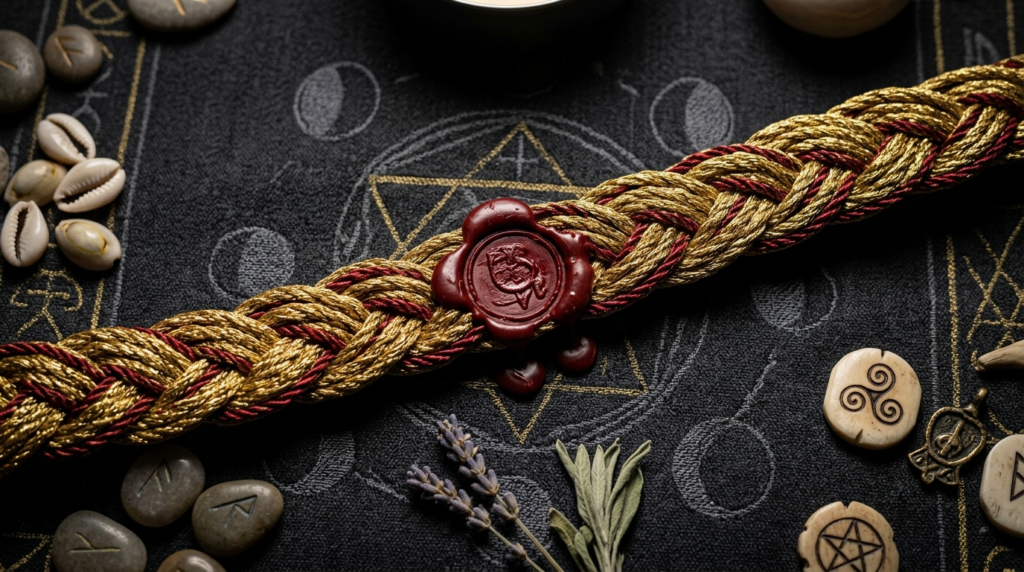
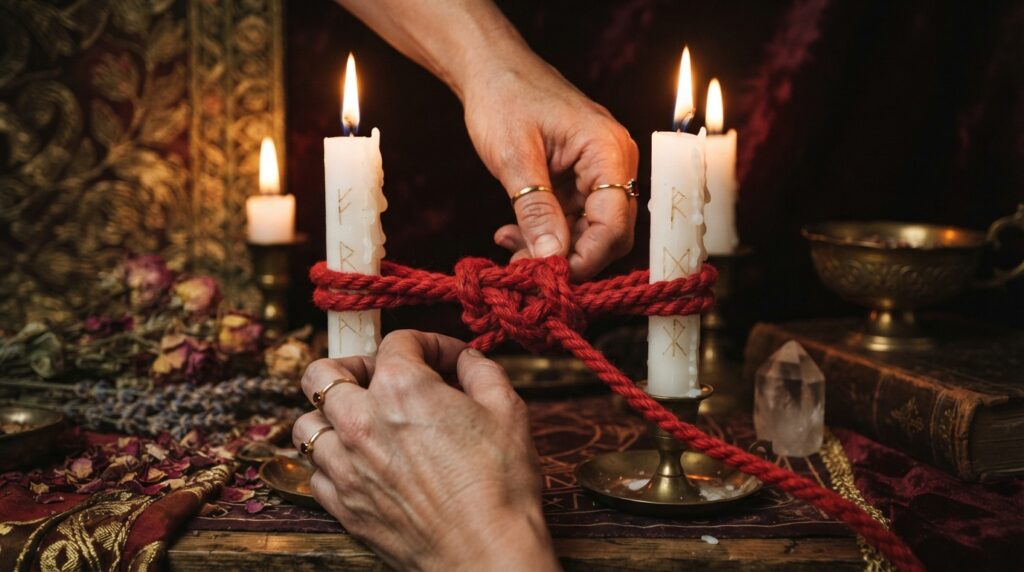
The ritual may use cord, thread, knots, candles, names written on paper, or a spoken vow. The idea is simple: what’s tied stays together. You’ll find versions of it in many folk traditions, and the details vary widely.
In my own practice, I treat binding as work for two people who both belong in the picture, such as partners recommitting or a couple preparing for marriage. I don’t do work meant to override another person’s will. If you want to understand the difference between the two kinds of work, my guide on binding spells versus love spells lays it out, and my page on binding love spell services describes what I will and won’t do.
One more definition matters here. People say “under a binding spell” when they mean “feels bound.” Those aren’t the same. A person can feel tied to someone for many reasons that have nothing to do with ritual, and I’ll explain them below.
How to tell if someone is under a binding spell: a calm checklist
The honest way to tell if someone is under a binding spell is to look at patterns over weeks, not moments, and to compare them against everyday explanations. No single feeling proves a spell. A cluster that doesn’t fit your life, doesn’t ease with rest and care, and ties to one specific person is worth taking seriously.
Here are the patterns people describe to me most often. I list them so you can name what you’re seeing. I’m not listing them to alarm you.
PATTERN 01A sudden fixation on one person
The thoughts arrived fast, often after an encounter, and they take up a lot of the day. The person doesn’t enjoy them. They feel more like a hook than a crush. Timing is the clue: an obvious start date, and no clear reason.
PATTERN 02An inability to let go, despite wanting to
The person knows the relationship is bad for them, or already ended, and still can’t stay away. They say things like “I don’t even like them anymore, but I can’t stop.” That tension between knowing and doing is what stands out.
PATTERN 03Restless sleep and vivid dreams
Sleep breaks up, and dreams about the other person are frequent and intense. Many people also report waking at the same hour night after night.
PATTERN 04Anxiety or tightness when apart
A feeling of dread or physical pressure when they’re away from the person, easing a little when they’re together. It’s one of the more distressing patterns, and it overlaps heavily with ordinary anxiety.
PATTERN 05A drop in interest in everyone else
Friends, hobbies and other prospects fade. The world narrows to one person. Loved ones often notice this before the person does.
PATTERN 06A sense of being “tied” or pulled
Some people use physical language: pulled by a string, tied to a post, magnetised. It isn’t proof of anything, but it’s a common way people describe what they feel.
Look at all six and notice what they have in common. Every one of them also describes ordinary heartbreak, attachment or anxiety. That’s why I tell people to hold the checklist loosely. It helps you describe what’s happening. It doesn’t diagnose a cause.

What ordinary causes should you rule out first?
You should rule out infatuation, grief, anxious attachment, trauma bonding, poor sleep, medication or substance effects, depression, and controlling behavior before you assume a spell. Each one can produce the same pattern, and each has help available that works better than a candle.
The table below pairs the common patterns with their ordinary explanations and the step I’d take.
| What the person feels | Ordinary explanation | First step |
|---|---|---|
| Constant thoughts of one person | Infatuation, early attachment, or grief after a breakup | Give it two to four weeks of good sleep and routine, and watch whether it eases |
| Can’t stay away from a harmful person | Trauma bonding, anxious attachment | Talk to a counselor. Tell a trusted friend. |
| Restless sleep, vivid dreams | Stress, caffeine, alcohol, medication changes | Fix sleep habits. See a doctor if it persists. |
| Anxiety when apart | Anxiety disorders, attachment patterns | See a doctor or therapist |
| Narrowing interest in others | Depression, isolation, controlling partner | See a doctor. If someone controls your contacts, seek support. |
I put infatuation at the top because it’s the most underrated cause. Falling for someone changes your brain chemistry in ways that feel exactly like a spell. People lose sleep, lose appetite, and can think of nothing else. It’s natural, it usually fades within months, and it needs no ritual at all.
I keep a place on this list for medication and substances too. A new prescription, a change in dose, heavy drinking or drug use can all create intrusive thoughts and a loop of worry. If anything like that changed around the time the fixation began, talk to a doctor before anyone else.
Is it a binding spell or a trauma bond?
It’s often a trauma bond, and I say that carefully. Trauma bonding is a term therapists use for a strong attachment that forms in a relationship that cycles between harm and kindness. The kind moments feel like relief, and the relief makes the person cling harder. From the outside, and sometimes from the inside, it can look exactly like being bound.
Signs of a trauma bond include loving someone who hurts you, feeling intense relief when they’re kind, defending them to friends, and feeling unable to leave even when you know you should. I’m not a therapist, and I won’t pretend to be one. But I’ve sat with enough people to know this pattern when I see it, and I’d rather send you toward a counselor than toward a ritual in those cases.
That doesn’t mean a spell is impossible. It means the first work should be on the relationship and your safety. If you’re unsure, the safest course is both: see a counselor and ask for an honest read from someone you trust in this tradition. The two don’t compete.
A word on safety
If someone is controlling where you go, who you speak to, or how you spend money, that’s a safety problem before it’s a spiritual one. Contact the National Domestic Violence Hotline or local support. If you’re in crisis, call or text 988 in the US. A binding question can wait for a safe moment.

What if you think a friend or family member is bound?
If you think someone you love is bound, start by listening, not by naming a cause. Telling a person “you’ve been cursed” can frighten them, isolate them, or make them defensive. Asking “how are you sleeping and eating?” opens a door.
Here’s how I’d approach it.
- Pick a calm moment and a private place. Say what you’ve noticed, in plain words: “You seem stuck on this, and you don’t seem happy.”
- Ask open questions. When did it start? What changed? What helps, even a little?
- Listen for control. Does anyone else decide what they do, who they see, how they spend money? That’s the first thing to address.
- Encourage ordinary support: a doctor, a counselor, sleep, food, time outdoors.
- If they’re open to a spiritual view, offer to sit with them while they talk to someone they trust. Don’t pay for anything on their behalf, and don’t let anyone pressure them.
You can’t make another adult do anything, and you shouldn’t try to. What you can do is stay close, stay kind and stay curious. People recover faster when someone is on their side without a lecture attached.
What can you do at home first?
Start with the basics that help in either case. They cost nothing, and they give you a clearer picture. I give these in this order because the early ones often solve the problem on their own.
- Sleep. Go to bed and rise at the same times for two weeks. Cut caffeine after noon and alcohol in the evenings.
- Eat regular meals. Low blood sugar makes anxious thoughts louder.
- Move your body every day, even a twenty-minute walk.
- Reduce contact with the person for a set period, if it’s safe to do so, and tell a friend what you’re doing.
- Write down each day how often the thoughts come and how strong they feel, from one to five.
- Cleanse your space with open windows, fresh air and a tidy room.
If you cast anything yourself, or suspect that you did, a clean ending helps. My guide on how to break a love spell walks you through a safe release with a candle, salt and plain words. If you’d like preparation before any ritual, read spiritual cleansing before love spells.
Give it two weeks. If the pattern is easing, it was probably ordinary, and you’ve helped it along. If it hasn’t changed at all, you’ve learned something too, and you can move on to asking for help with a clearer idea of what you’re dealing with.

Most “binding” worries have an ordinary cause. Rule those out first, and you’ll know what’s left.Baba Ali
Why do people suspect a binding in the first place?
People suspect a binding because strong feeling needs a story, and “something was done to me” is an easier story than “I’m hurting and I don’t know why.” That’s not a criticism. It’s one of the oldest human habits. When a feeling arrives with no clear cause, the mind goes looking for one, and in many cultures a spell is a familiar answer.
There are practical reasons too. Some people have seen a ritual item in their home or been told by an ex, “you’ll never get over me.” Others come from families where such workings are discussed openly, so the idea doesn’t seem strange. And some have been through a bruising breakup, where intrusive thoughts come with the territory.
I don’t tell anyone their worry is silly. I tell them the worry deserves a careful look, and that a careful look usually starts with the body and the calendar. When did this start? What was happening in my life? How have I been sleeping? Did anything change in my health, my medication or my drinking? Those questions solve a surprising number of cases before anyone lights a candle.
If a belief in this kind of work is part of your family or culture, you don’t have to give it up to follow this advice. You can hold the spiritual explanation and the ordinary one at the same time, and look after both.
What does a private two-week self-check look like?
A two-week self-check gives you facts to work with. It takes five minutes a day and costs nothing. This is how to tell if someone is under a binding spell in the most practical way I know: watch what changes when you rest, eat and get some distance, and see what stays the same.
| Days | What to do | What to note |
|---|---|---|
| 1 to 3 | Fix sleep and meals. Cut caffeine after noon. Walk daily. | How often the person crosses your mind, from one to five |
| 4 to 7 | Reduce contact if it’s safe. Tell one trusted friend what you’re doing. | Does the pull ease with distance, or grow? |
| 8 to 10 | Keep the routine. Cleanse your space and clear any objects tied to the person. | Any change in sleep, dreams or mood |
| 11 to 14 | Review your notes. Ask a friend what they’ve noticed. | Trend: easing, flat, or worse |
At day fourteen, look at the trend. If the pull has eased, even slightly, ordinary causes were probably doing most of the work, and you’ve helped yourself. If it’s flat, keep going another two weeks and add support from a counselor. If it’s worse, or if you feel unsafe, don’t wait. Talk to a doctor and a trusted person now.
One caution on the “reduce contact” step. If the person is a partner, a family member or a co-worker you can’t avoid, don’t force it. Do what you can safely, and don’t cut off anyone you depend on. And if the contact itself is frightening, go to the safety resources above.
What myths cloud this question?
A few myths cause real harm, and they come up often enough to name.
One myth says every strong attachment is a spell. It isn’t. Humans get attached to people, with or without ritual, and some attachments are painful. Calling them spells can delay the care that actually helps.
Another claims a spell can’t be resisted. In my tradition, a working acts on an opening. Rest, steady routines, good company and a clear mind close the opening. I’ve never met anyone whose life was out of their hands entirely.
A third myth says a practitioner can read a spell from a photo or a name alone. A good practitioner may pick up impressions, but they’ll still ask questions, and they won’t claim certainty from a picture. Anyone who tells you a precise diagnosis from afar, then asks for money, is selling something.
The fourth is that removal requires secrecy. Be wary of advice like “don’t tell anyone, don’t see a doctor, don’t talk to your family.” Isolation is how harm grows. Trusted people belong in the room.
And the fifth is that fear means you’re right. Fear is a sign you’re distressed. It doesn’t tell you the cause. Please treat your fear gently and keep asking questions.
When should you ask a practitioner for help?
You should ask for a practitioner’s view when two weeks of care haven’t moved the pattern, when it’s getting worse, or when you have a specific reason to think a working was done: a ritual item found at home, a confession, or a known attempt by someone to tie you to them.
Be wary at this step. A person in distress is easy to exploit. Here are the red flags I’d watch for:
- A practitioner who says you’re cursed within minutes of meeting you.
- Pressure to decide today, or a claim that waiting will make it worse.
- Large payments demanded before any explanation.
- A refusal to tell you what they will actually do.
- Requests for personal details beyond what the work needs, such as passwords or bank information.
A good practitioner asks questions, gives you time, tells you what they think and what they don’t know, and says plainly when the problem looks ordinary. If you’d like a checklist, my page on how to tell a love spell caster is a scam goes through eight signs, and my guide on is it safe to pay a spell caster online covers payment safety.
For situations where a third person is involved, my page on third party removal explains its scope and boundaries. And for the topic of someone placing a spell on you, my older guide on signs someone put a love spell on you sets out the beliefs involved.
How I assess a possible binding in my own practice
When someone brings me this worry, I start with a conversation, not a ritual. I ask when it began and what was happening in their life then. I ask about sleep, work, medication and relationships. I ask whether anyone is controlling them. I ask what they’ve already tried.
Then I tell them what I think. Often I say that I think the cause is ordinary and suggest a doctor or counselor, and I mean it. When I think a working may be involved, I explain what I’d do, how long it takes, and what I can’t promise. The ritual work I do finishes within three to seven days, and what changes in your life runs on its own clock.
I don’t charge for the spiritual work. In my tradition it isn’t done, so the client covers only the materials for their specific case, and any thanks afterward is a free-will gift. I won’t promise a result. Nobody honest can. What I can promise is a clear explanation and no pressure.
If you’d like to talk it over, the free 30-minute consultation is a plain conversation with no obligation. My consultation process page shows what to expect, and my ethical practice page explains the limits I keep.
Worried about a binding, yours or someone else’s?
Tell me what you’ve noticed and I’ll give you an honest read, including when I think the cause is ordinary. The first 30 minutes are free, there’s no obligation, and if any ritual follows you cover only the materials.
What happens after you decide to deal with it?
Expect a gradual change, and expect it to be dull at first. The people I see recover best are the ones who treat this like any other healing: rest, routine, honest talk and patience. The first days often bring tiredness and low mood, which is normal when something heavy lifts.
In the first week you may notice better sleep or a thought that comes and goes more easily. In weeks two to four, many people feel more like themselves, and old interests return. I can’t promise anyone a timeline, and I’d distrust anyone who does. If nothing has changed at all after a month, I’d ask you to see a doctor or counselor if you haven’t, and I’d review the whole picture again.
If you realize that someone did tie you to them against your will, that’s serious, and you may have more than a spiritual problem. Keep notes, tell someone you trust, and consider talking to local authorities if you’ve been harassed or threatened. Spiritual help and real-world help can sit side by side.
Last, give yourself some kindness. Feeling stuck on a person is exhausting, and it says nothing bad about you. It means you’re human and you’ve been through something hard. Whatever the cause, you deserve rest and a quiet mind.
Frequently asked questions
How do I know if I’m under a binding spell?
You can’t tell from feelings alone. A sudden fixation, restless sleep and anxiety when apart fit a binding, but they also fit infatuation, grief and trauma bonding. Rule out ordinary causes first, see a doctor for physical symptoms, and then ask a practitioner for an honest second opinion.
What are the signs of a binding spell?
People describe a sudden fixation on one person, an inability to let go despite wanting to, restless sleep, anxiety when apart, narrowing interest in others, and a feeling of being pulled. Each one has an ordinary explanation too, so treat the list as a way to describe what you feel, not as proof.
Can a binding spell make someone love you?
I don’t believe a ritual can create love where none exists, and I don’t do work meant to override someone’s will. Binding work in my practice supports a commitment between two people who both belong in the picture. Beware anyone who promises to make a person love you.
How long does a binding spell last?
There’s no reliable answer, because it depends on the work, the people and the circumstances. Some people describe a working fading in weeks, and others describe a longer pull. Without a clear cause, track how you feel over a few weeks and look at sleep, routine and support first.
How do I get rid of a binding spell?
Start with rest, routine and distance from the trigger, if it’s safe. Then do a clear release: a spoken statement, clearing any objects, cleansing the space and closing the work. My guide on how to break a love spell gives the steps. If it persists, ask a practitioner you trust.
Is a binding spell the same as a love spell?
No. A love spell aims to open or restore affection. A binding spell aims to tie people or a commitment in place. Binding work asks more of both people and needs more care. I explain the difference in a separate guide on binding spells versus love spells.
Should I see a doctor or a spell caster first?
Start with a doctor or counselor if you have physical symptoms, intrusive thoughts, or trouble sleeping. They can rule out medical and psychological causes quickly. A practitioner can be a second step, and a good one will agree with that order.
What if my partner is controlling me?
Treat it as a safety issue first. Controlling who you see, where you go or how you spend money isn’t a spell problem. Contact the National Domestic Violence Hotline or local support, tell someone you trust, and keep a record. Spiritual questions can wait until you’re safe.
Can a practitioner remove a binding spell for free?
In my practice there’s no fee for the spiritual work. The client covers only the materials for their specific case, and any gratitude afterward is voluntary. Be careful with anyone who demands a large sum upfront, says you’re cursed, or pressures you to decide at once.
More Sacred Wisdom

Ready to Reunite With Your Soulmate?
If the signs are speaking to you, do not let the moment pass. Book a free consultation with Baba Ali today and discover the sacred path back to the love you deserve.