🌿 Ritual Tools
What Herbs Are Used in Love Spells?
Rose, lavender, cinnamon, bay leaf and eleven more. What each is traditionally linked with, how to source and store them, and safety notes.
Open a kitchen cupboard and you’ll find half of what people use in love spells. Cinnamon, bay leaf, mint, vanilla, rosemary. Walk past a garden in summer and you’ll find the rest: roses, lavender, jasmine, thyme. So what herbs are used in love spells, and what is each one actually for?
I’ll walk you through fifteen of the most common, with what each is traditionally linked to, how people use it and the safety notes that rarely get mentioned. I’ll also explain how to buy, dry and store herbs, how to combine them without turning your ritual into a muddle, and what to avoid. These are folk associations, not medicine. Nothing here is a health claim.
I’m Baba Ali. I’ve worked in the Senegalese ancestral tradition I was taught for more than 30 years, and plants have always had a place in that work. I’ll tell you how I think about them, including where I’d tell you to leave an herb alone.
Quick answer
What herbs are used in love spells? Rose, lavender, jasmine, hibiscus, cinnamon, vanilla, basil, bay leaf, rosemary, mint, cardamom, chamomile, thyme, yarrow and clove are among the most common. Each carries a traditional meaning, such as affection, calm or warmth. Use only safe, food-grade herbs, and never eat what you ritually use.
Key takeaways
- Fifteen common herbs and flowers carry traditional links to love, calm, courage and loyalty.
- Herbs act as symbols and focus, and they aren’t medicine.
- Choose by meaning: two to five herbs are plenty for most workings.
- Keep herbs away from open flame, pets, small children and allergy sufferers, and never ingest ritual herbs.
- Buy from reputable sellers, dry and store herbs well, and replace them when they go stale.
Last reviewed: November 2026 by Baba Ali
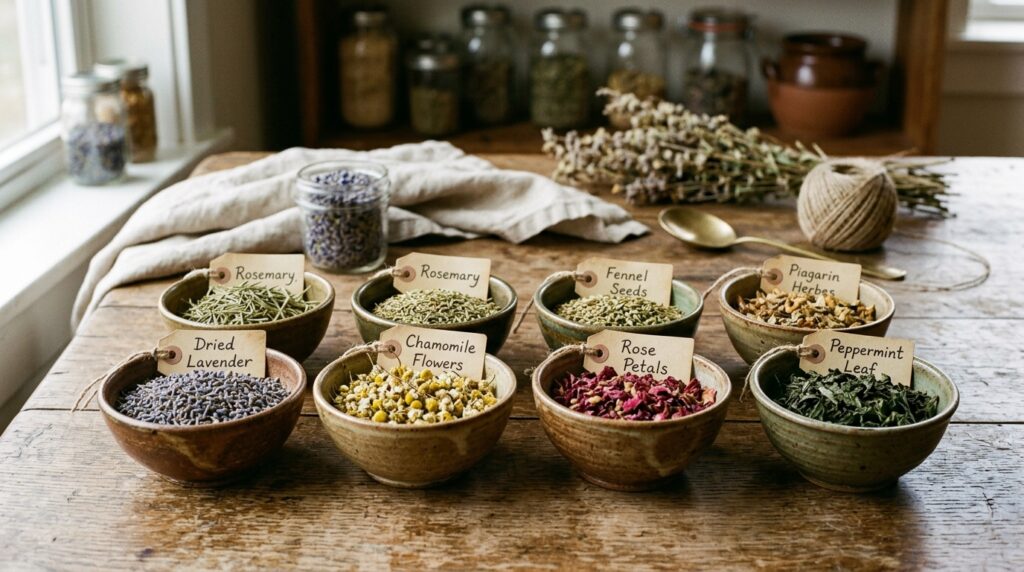
What herbs are used in love spells?
The herbs most used in love spells are rose, lavender, jasmine, hibiscus, cinnamon, vanilla, basil, bay leaf, rosemary, mint, cardamom, chamomile, thyme, yarrow and clove. They’re popular because they’re easy to find, they smell good, and each carries an old and widely shared meaning.
People choose herbs for three reasons. First, symbolism: rose stands for love, lavender for calm, rosemary for remembrance. Second, sensory effect: scents like jasmine and vanilla set a mood, and a mood changes how you carry yourself. Third, tradition: many families pass down particular combinations, and using them connects you to people who came before.
I’ll say again that these are traditions and not treatments. An herb in a jar won’t change another person’s feelings. It can help you focus, calm yourself and mark a clear intention, and that’s real value.
Fifteen common herbs, side by side
This table gives you the fifteen at a glance. After it, I’ll say more about the ones I use most. The safety column matters, so please read it.
| Herb | Traditionally linked with | Common use | Safety note |
|---|---|---|---|
| Rose petals | Love, affection, self-love | Jars, sachets, altar bowls | Use pesticide-free petals. Check for fragrance allergies. |
| Lavender | Calm, peace, restful sleep | Sachets, jars, bedside bundles | Keep lavender oil away from pets. |
| Jasmine | Attraction, sensual love | Dried flowers in jars or sachets | Strong scent can bother allergy sufferers. |
| Hibiscus | Passion, warmth | Dried petals in jars | Ritual use only. Don’t ingest for ritual purposes. |
| Cinnamon | Warmth, drawing, sweetening | Sticks in jars, ground on a candle dish | Strong cinnamon oil irritates skin and is toxic to pets. |
| Vanilla | Comfort, sweetness, affection | Pods in jars | Seal well so sugar-like scent doesn’t attract ants. |
| Basil | Love, loyalty (in folk practice) | Dried leaves in jars or sachets | Keep dry to prevent mold. |
| Bay leaf | Wishes, clarity, intention | Wish paper, jars | Don’t swallow bay leaves. Burn only in a heat-safe dish. |
| Rosemary | Remembrance, loyalty, clear thought | Sprigs in jars, bundles | Dried needles are sharp. Keep from small children. |
| Mint | Freshness, kind words, renewal | Dried leaves in jars | Strong oils can bother pets. |
| Cardamom | Warmth, closeness | Pods in jars or sachets | Keep pods away from small children. |
| Chamomile | Calm, patience, soothing quarrels | Dried flowers in sachets | Those allergic to ragweed may react. |
| Thyme | Courage, honest speech | Sprigs in jars | Keep dry. |
| Yarrow | Courage, folk divination of love | Dried flowers in sachets | Can irritate skin. Avoid contact in pregnancy. |
| Clove | Protection, desire, steadiness | Whole cloves in jars | Clove oil is a strong irritant. Keep from pets. |
You’ll notice some herbs appear in many aims. That’s normal. Traditions overlap, and meanings shift from place to place. If your grandmother used basil for something I haven’t listed, trust her, and use it safely.
How do the main herbs differ in practice?
Here are the ones I use most, with how I’d approach each.
HERB 01Rose
Rose is the herb of the open heart. I use it when someone wants to soften toward themselves or others. It pairs well with lavender for calm, and with cinnamon for warmth. A bowl of dried petals by the bed is among the gentlest practices I know. If you’d like a rose-themed ritual with more detail, see my soulmate attraction spell page.
HERB 02Lavender
Lavender is for rest. After a breakup, many people stop sleeping well, and a small lavender sachet under the pillow can help them settle. It also works in a jar meant to calm a quarrel. Remember that essential oils are very strong and can harm pets, so I prefer dried flowers.
HERB 03Cinnamon
Cinnamon brings warmth and a sense of drawing something near. A stick in a jar adds that quality. Because ground cinnamon can irritate eyes and lungs, I use sticks or small pieces rather than powder.
HERB 04Bay leaf
Bay leaf is for stating a wish clearly. People write a short wish on a leaf and keep it, or burn it safely. A bay leaf is tough and can be a choking hazard if swallowed, so keep them out of food and away from children and pets.
HERB 05Rosemary
Rosemary stands for remembrance and loyalty. I suggest it when someone wants to hold a memory with respect or to keep a promise to themselves. A sprig in a jar keeps its shape for months.
HERB 06Chamomile
Chamomile soothes. I use it for people who want to ease tension in a relationship or within themselves. It’s a gentle herb, and a good place to begin if you’re new to this.
The others in the table follow the same logic. Pick herbs whose meanings fit your aim, and leave the rest. For definitions of terms you may meet, see my love spell glossary.
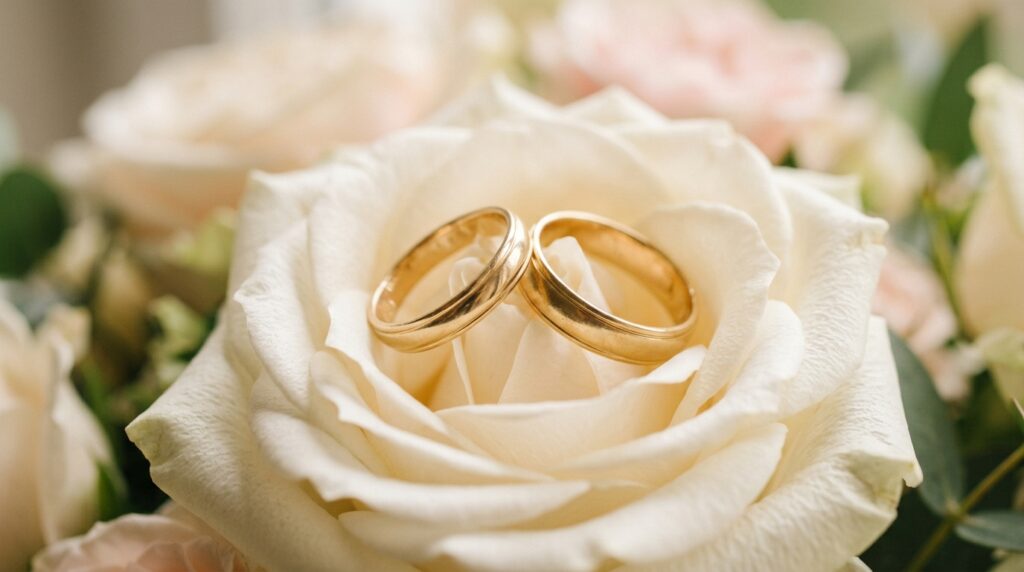
How are herbs used in love spells?
Herbs are used in a handful of simple ways. None needs complicated tools. I’ll list the safe ones and tell you which to skip.
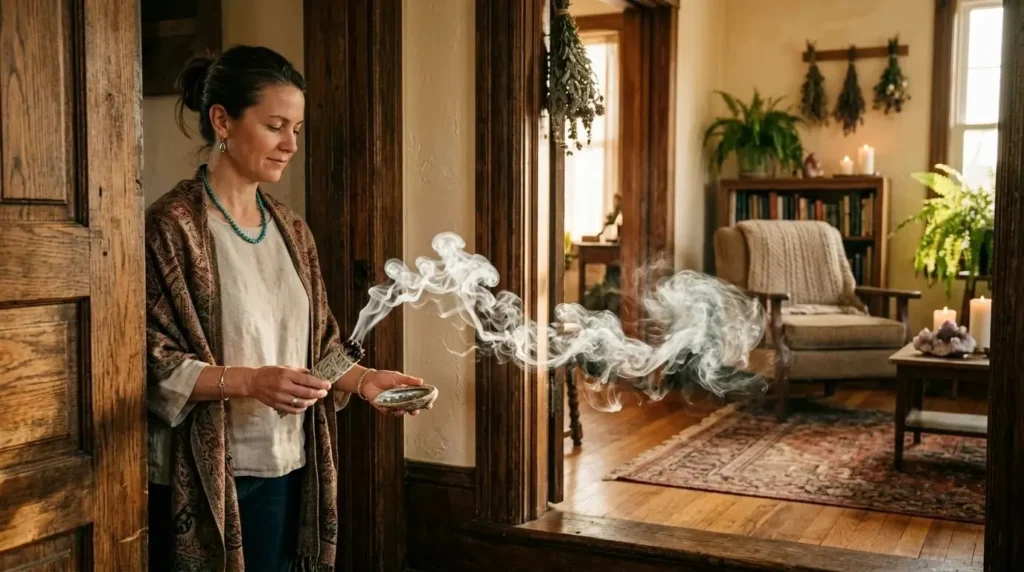
In a jar is the most common. You layer dried herbs with a stone and a paper intention, then seal it. My guide on how spell jars work explains the method, and the honey jar spell covers the sweetened version.
In a sachet or small cloth bag, herbs travel with you. A pinch of dried rose, lavender and chamomile tied into a square of cloth makes a bedside charm. Keep it away from heat.
In an altar bowl, a small dish of dried petals on a table acts as a daily reminder. Replace the herbs every few weeks, and compost the old ones.
Near a candle is common, but I’d urge care. Sprinkling dry herbs on or near a burning candle is a fire risk, because dry plant matter ignites. If you use a candle, keep herbs in a bowl beside it, not on the wax. My candle magic guide covers safe practice.
Burned as incense is a traditional use, but it needs a heat-safe dish, an open window and small amounts. Smoke can bother people with asthma or allergies, and it can harm pets and birds. If anyone in your home is sensitive, skip it.
I don’t recommend simmering or boiling herbs for ritual baths or teas, and I never advise eating or drinking ritual herbs. Cooking herbs for food is different, and it belongs in the kitchen. If you want to use an herb as food or tea, check with a doctor if you’re pregnant, nursing, on medication or managing a health condition.
A simple bay leaf wish, step by step
The bay leaf wish is one of the oldest and simplest herb rituals. It takes five minutes. I include it because it works on your clarity and asks nothing of anyone else. Here’s my version.
- Clear a small space. Wash your hands. Put a heat-safe dish on the table.
- Take one dry bay leaf. With a pen, write a short wish in positive words, such as “I am open to a steady, honest love.”
- Hold the leaf and read the wish aloud once.
- Choose: keep the leaf in a small jar or sachet, or burn it. To burn, hold it with tongs over the dish, light the tip, and set it down. Keep water nearby. Never leave it unattended.
- When the leaf has burned out, let it cool fully. Drop the ashes outdoors or in the trash.
- Take one real step toward your wish that day, however small.
If burning worries you, keep the leaf intact in a jar, and replace it after a moon cycle. The act of writing and reading the wish is the heart of it. The flame is only a flourish.
A word on safety
Dry herbs burn quickly, so keep them away from flames, curtains and paper. Never eat or drink ritual herbs. Some plants named in old books, such as oleander, foxglove and nightshade, are poisonous, so avoid them completely. Keep herbs and oils away from pets and children, and stop if you notice a reaction. In an emergency, call your local emergency number.
How do you choose herbs by aim?
Choose by meaning. Decide what your working is for, then pick two to five herbs whose traditional links match. More isn’t better. A tight group has a clear voice, and a crowd of fifteen herbs mumbles.
| Your aim | Herbs to consider | Why they fit |
|---|---|---|
| Open your heart after a loss | Rose, chamomile, lavender | Gentleness, calm, rest |
| Attract new love | Rose, jasmine, cinnamon | Openness, attraction, warmth |
| Strengthen loyalty in a relationship | Rosemary, basil, clove | Remembrance, steadiness |
| Speak honestly | Thyme, mint, yarrow | Courage, fresh and clear speech |
| Ease a quarrel | Chamomile, vanilla, rose | Soothing, sweetness, softness |
| Mark a wish clearly | Bay leaf | Clarity of intention |
Combine herbs with other tools if you like. A rose quartz and a few petals work well together, and my guide on which crystals attract love explains the stones. For candle colors that suit each aim, see candle colors for love magic.
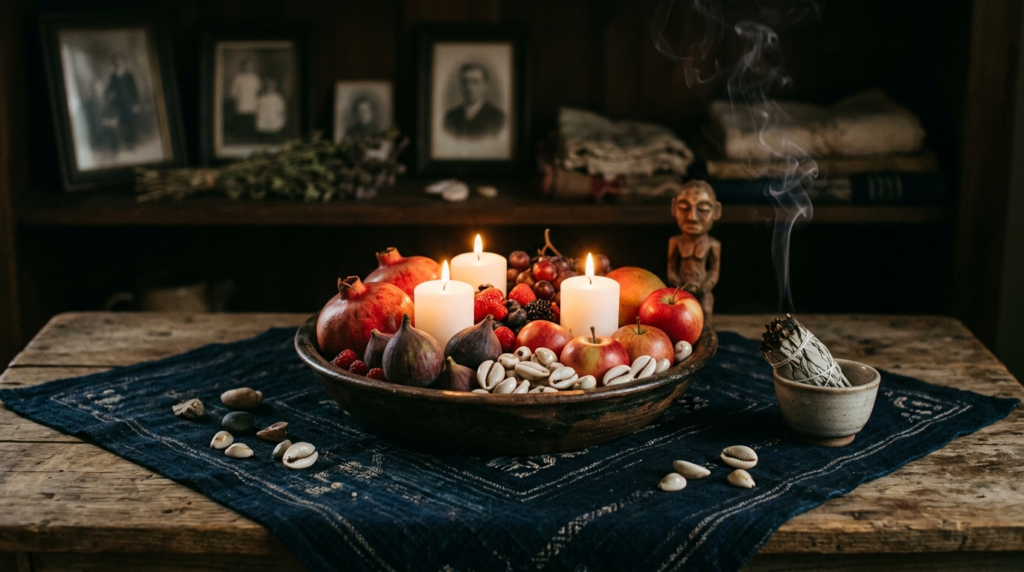
An herb is a word in a language older than any of us. Choose a few words and say them clearly.Baba Ali
Where should you buy herbs, and how do you store them?
Buy from reputable sellers, store in glass away from light, and replace herbs once they lose color and scent. Quality matters because stale, moldy or mislabeled herbs can cause problems.
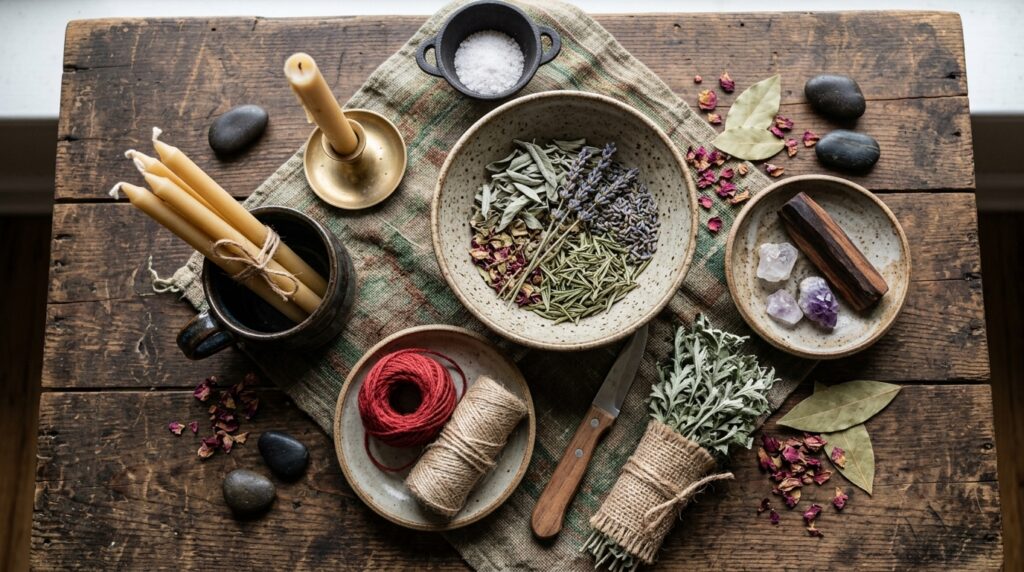
For buying, a grocery store spice aisle, a farmers’ market or a trusted herb shop will serve you well. Look for dried herbs that are bright in color and fragrant. Avoid anything dusty, discolored or damp. Choose food-grade herbs wherever you can, and avoid anything with unfamiliar ingredients or heavy fragrance added.
If you grow your own, wash and pat the herbs dry, tie small bundles and hang them in a dry, airy, shaded place for one to two weeks. Once they crumble easily, they’re ready. Store them in clean glass jars with lids, and label each with the name and date.
For storing, keep jars in a cool, dark cupboard. Check once a month for moisture or mold. Throw out anything that smells musty or looks fuzzy. Most dried herbs keep their strength for six months to a year, and then they fade. Compost old herbs, and don’t toss them in the trash if you have a garden.
Be careful with foraging. Many wild plants look alike, and some are poisonous. Don’t harvest anything you can’t identify with certainty, and don’t gather from roadsides, where plants may be contaminated.
Which herbs and practices should you avoid?
You should avoid any plant that’s poisonous, any herb you can’t identify and any practice that asks you to ingest or apply herbs to your body for a ritual purpose. Old books mention many plants, and some are dangerous.
Poisonous plants sometimes found in older folk writing include oleander, foxglove, belladonna and lily of the valley. Never use them, and never keep them where children or pets can reach them. Even touching some plants can cause skin reactions.
Avoid essential oils unless you know how to handle them. They’re highly concentrated, can irritate skin and are dangerous to pets, especially cats. A few drops can be too much in a small space.
Avoid putting herbs on your skin, in your food or in your drink as part of a spell, unless a doctor has approved them. A ritual doesn’t make a plant safe.
If someone sells you a “special herb” at a high price with a promise of a result, be wary. Ordinary herbs from your kitchen serve the same symbolic purposes. My guide on how to tell a love spell caster is a scam lists other warning signs.
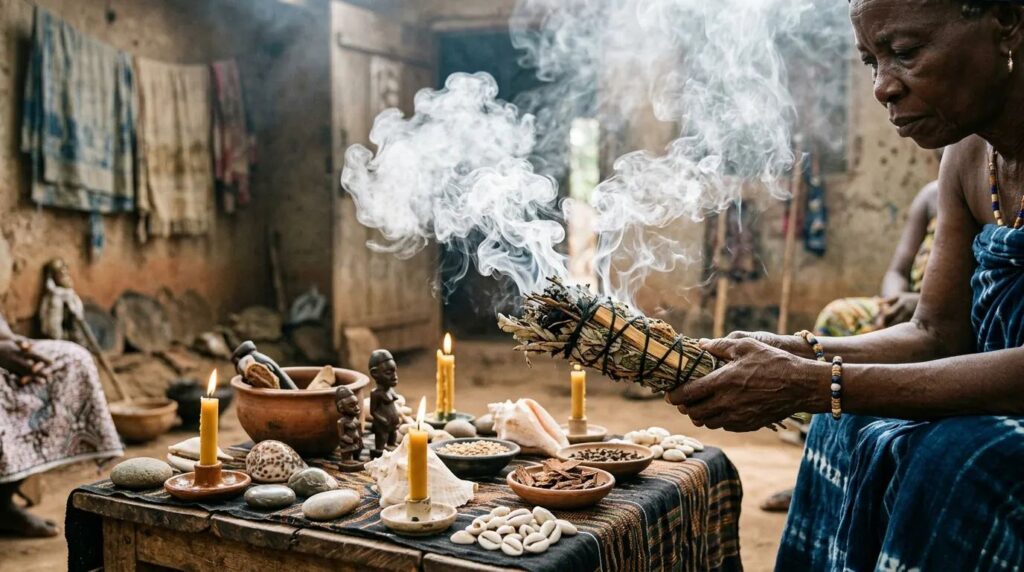
What does a simple three-herb sachet look like?
A three-herb sachet is the easiest herb working I know, and a good first project. It takes ten minutes, costs very little and carries no fire risk. You’ll need a small square of clean cotton cloth, a piece of string or ribbon, and three dried herbs chosen for your aim.
Here’s an example for opening your heart after a loss. It uses rose for gentleness, chamomile for calm and a small piece of cinnamon stick for warmth. Adapt the herbs to your own aim using the table above.
- Wash your hands and clear a small space. Say your sentence aloud: “I’m open to a steady, honest love.”
- Place the cloth flat. Add a pinch of rose petals, naming each as it goes in: “gentleness.”
- Add a pinch of chamomile: “calm.”
- Add one short piece of cinnamon stick: “warmth.”
- Gather the corners of the cloth, tie the string and make a small knot. Tie it loosely and don’t pull it tight.
- Hold the sachet for a minute and think of the life you’re describing.
- Keep it in a drawer, a pocket or under your pillow. Keep it dry and away from pets.
After a moon cycle, about a month, open the sachet. Compost the herbs and wash the cloth. If your aim has changed, make a new one. Notice what you feel when you take it apart. That feeling tells you something about where you are now.
Do herb meanings differ between cultures?
Yes, a great deal. The same plant can mean different things in different places, and families often hold their own versions. Basil is linked with love in some folk traditions and with protection in others. Rosemary stands for remembrance in some places and for cleansing in others. Mint can mean fresh speech, prosperity or hospitality, depending on who you ask.
That’s one reason I’m cautious about any list that claims to be the true meaning of an herb. No single authority settles these questions. What you’ll find in books and online is a blend of old European folk practice, modern writing and inherited family custom, and different sources disagree.
My advice is to start with what’s meaningful to you. If your grandmother used basil on the doorstep for good luck, use it that way. If an herb has a personal association, like the lavender your mother grew, that association is stronger for you than anything in a table. A list like mine is a starting point for people who have no tradition of their own to lean on.
I also don’t claim that every herb in this guide belongs to the Senegalese ancestral tradition I was taught. Some do, some are common across many places, and some come from other folk traditions I’ve encountered. I’ll say plainly when something is my own practice and when it’s a wider custom. If you’d like to learn about the tradition I was taught, my guide to West African love magic gives context.
How I use herbs in my own practice
I use herbs as supports, not as engines. A few dried petals, a sprig of rosemary, a stick of cinnamon: each is a small, clear symbol that helps a person hold their intention. I explain what each one is for, because I want people to understand their own ritual and own it.
I don’t charge for the spiritual work. In my tradition it isn’t done, so the client covers only the materials needed for their situation, and any gratitude afterward is a free-will gift. When herbs are part of the work, I tell you what each costs and why it’s there. I won’t promise a result, because nobody honest can. The ritual work finishes within three to seven days, and what happens in your life runs on its own clock.
If you’re new to all this, start with my love spells for beginners guide, and read spiritual cleansing before love spells. For a gentle starting ritual, how to cast a love spell lays out the steps. And if you’d like to talk it over, the free 30-minute consultation is a plain conversation with no obligation.
Not sure which herbs fit your situation?
Tell me what you’re hoping for, and I’ll suggest a short, safe list and explain what each herb is for. The first 30 minutes are free, there’s no obligation, and if any work follows, you cover only the materials.
What mistakes do people make with herbs?
The mistakes are small and easy to fix. Using too many herbs is the first. A dozen herbs in a jar blur one another. Pick two to five with a clear reason.
Using stale herbs comes next. Herbs that have lost their color and scent have lost much of their presence. Replace them, and keep a date on every jar.
Ignoring safety is the most serious. Don’t burn large quantities indoors, don’t use oils around pets and don’t ingest anything. A pleasant ritual shouldn’t put anyone at risk.
Copying a recipe you don’t understand is another. If you can’t say why an herb is in your jar, leave it out. Meaning gives herbs their voice.
Buying costly “special” herbs is a costly one. A kitchen cupboard has most of what you need. If a seller insists that only their blend will work, take that as a reason to look elsewhere.
And expecting herbs to do the whole job. Herbs support your focus. You still have to talk, listen, rest and act. A rose petal won’t call the person you hope to hear from.
Frequently asked questions
What herbs are used in love spells?
Common ones include rose, lavender, jasmine, hibiscus, cinnamon, vanilla, basil, bay leaf, rosemary, mint, cardamom, chamomile, thyme, yarrow and clove. Each carries a traditional meaning, such as affection, calm, warmth or courage. They act as symbols and focus. They aren’t medicine, and they shouldn’t be eaten for ritual purposes.
What herb is best for attracting love?
Rose is the best known for opening the heart, with jasmine and cinnamon often added for attraction and warmth. The “best” herb is the one whose meaning fits your aim and that you can use safely. Start with two or three, and pair them with real action.
How do I use bay leaves in a love spell?
Write a short, positive wish on a dry bay leaf, read it aloud and keep it in a jar, or burn it safely in a heat-safe dish with water nearby. Never swallow bay leaves, and never leave a burning leaf unattended. The writing and reading matter more than the flame.
Can I use herbs from my kitchen?
Yes. Cinnamon, bay leaf, rosemary, basil, thyme, mint and cardamom are all common kitchen herbs with traditional love associations. Choose fresh, bright, fragrant ones, and store them dry. Ritual herbs shouldn’t be added to food afterward, so keep a separate jar.
Is it safe to burn herbs for love spells?
Only with care. Dry herbs ignite quickly, so use a heat-safe dish, small amounts, an open window and water nearby. Smoke can bother people with asthma and harm pets and birds. If anyone at home is sensitive, skip burning and use jars or sachets instead.
Are any herbs dangerous for pets or children?
Yes. Essential oils of lavender, cinnamon, clove and mint can be toxic to pets, especially cats. Small whole spices and bay leaves are choking hazards. Some plants in old books, such as oleander and foxglove, are poisonous. Keep all herbs and oils out of reach.
Can I drink herbal tea for a love spell?
I don’t advise ingesting ritual herbs. If you enjoy herbal tea, drink it as tea and check with a doctor if you’re pregnant, nursing or on medication. Some herbs, like yarrow, can cause problems. A ritual doesn’t make a plant safe to consume.
How long do ritual herbs last?
Most dried herbs keep their scent and color for six months to a year when stored in sealed glass jars in a cool, dark place. Replace them when they fade or smell musty, and throw out anything moldy. Label jars with the name and date.
Do I need expensive herbs for a spell?
No. Ordinary kitchen and garden herbs serve the same symbolic purposes as costly ones. Be wary of any seller who says only their special blend will work, or who promises a result with a particular product. Meaning and focus matter more than price.
More Sacred Wisdom
Ready to Reunite With Your Soulmate?
If the signs are speaking to you, do not let the moment pass. Book a free consultation with Baba Ali today and discover the sacred path back to the love you deserve.