🕯️ Ritual Guides
How to Do a Honey Jar Spell Step by Step
A plain, doable method for a honey jar, from cleansing the glass to sealing it, with fire safety and troubleshooting.
A honey jar is one of the simplest workings in folk practice, and one of the easiest to do badly. People copy a list of ingredients, pour in honey, light a candle on the lid and wonder why nothing happens, or why the jar cracked. If you want to know how to do a honey jar spell step by step, the steps matter, and so does the reason behind each one.
This guide gives you the full method, from choosing your aim to retiring the jar. You’ll get a materials list, nine clear steps, a fire-safe way to seal the work, troubleshooting for the things that go wrong (crystallized honey, ants, mold) and honest limits on what a honey jar can do. If you want the background on what a honey jar is and where it fits, read my companion guide, the honey jar spell, first or afterward.
I’m Baba Ali. I’ve worked in the Senegalese ancestral tradition I was taught for more than 30 years. Honey jars are widely used in many folk traditions, and what I describe here is my own practice, shaped for safety and honesty.
Quick answer
How to do a honey jar spell step by step: write a clear, free-will intention, cleanse a glass jar, add herbs and a paper with your sentence, cover them with honey, seal the lid, close the work beside a candle in a dish, and keep the jar cool and dry. Give it a moon cycle, then keep, refresh or retire it.
Key takeaways
- A honey jar is a sweetening working: honey stands for warmth and softened attitudes.
- Nine steps cover the whole process, from intention to retirement.
- Never stand a lit candle on a glass jar lid, because heat can crack the jar or start a fire.
- Honey crystallizing is normal, but ants and mold mean something went wrong with sealing.
- A honey jar can’t force anyone’s feelings, so aim it at openness and warmth.
Last reviewed: November 2026 by Baba Ali
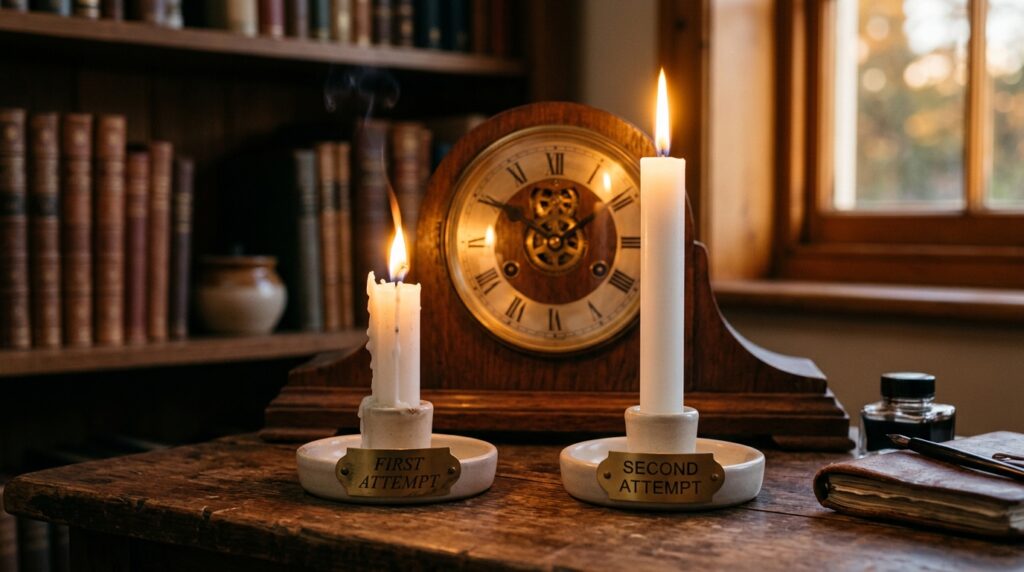
Before you begin: what is a honey jar spell for?
A honey jar spell is a sweetening working. Honey stands for warmth, softness and the drawing of good feeling, so the jar is built to sweeten an atmosphere or a person’s attitude toward you. People use it to ease a quarrel, to open the way to a kinder conversation, or to prepare themselves to be warm and open to love.
What it isn’t is a way to make someone love you. In my tradition, and in my own conscience, the work has to leave other people free. If you aim a honey jar at forcing a feeling in another person, you’ve moved from sweetening to compelling, and I’d ask you to stop. My guide on love spells and free will explains the line.
Decide which of two kinds of jar you want. A named jar is aimed at a specific bond: for example, to soften things with a partner after a quarrel. An open-heart jar has no name. It’s aimed at your own readiness for love, and I think it’s the gentlest and most honest kind. If you’re unsure, begin with the open-heart jar.
What materials do you need?
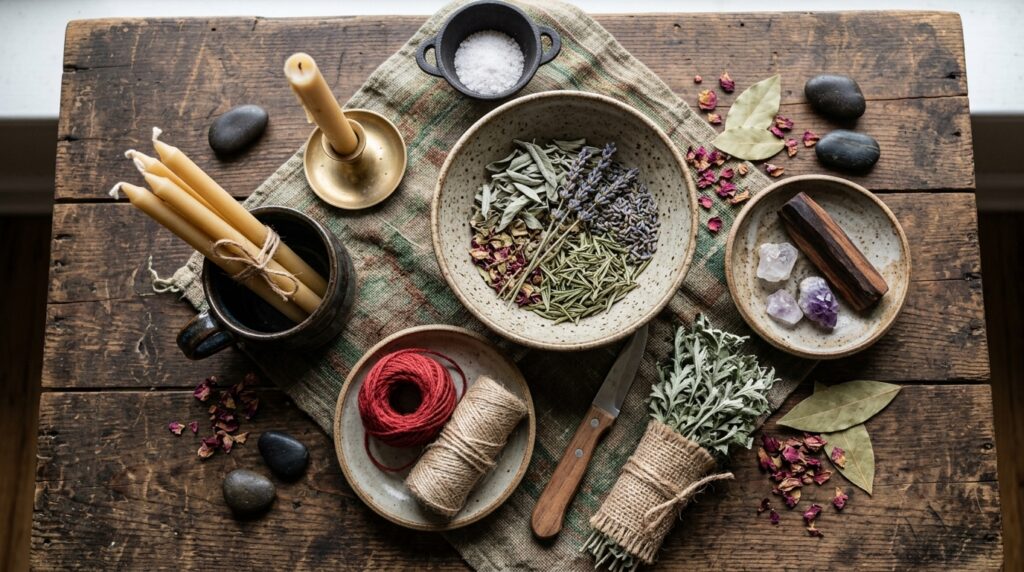
You need very little, and everything is cheap and easy to find. Gather it all before you begin, and lay it out in order.
- A small glass jar with a tight lid, about four to eight ounces. A clean jam or spice jar works.
- Real honey, enough to fill the jar most of the way. Plain, unflavored honey is best.
- A strip of plain paper and a pen. A dark pen on light paper is easiest to read.
- Two or three dried herbs that match your aim. Rose petals, cinnamon and lavender are common. My guide on what herbs are used in love spells helps you choose.
- One small candle, such as a tealight or a short pink or white taper, and a heat-safe dish.
- Matches and a snuffer, or a spoon to snuff the flame.
- A clean spoon and a cloth.
- A shallow dish of water, to stand the jar in later, if ants are a concern.
I don’t ask for hair, nail clippings, bodily fluids or personal belongings of another person. Some folk practices use them. I don’t, and I’d advise against it, because it crosses a boundary of privacy and consent. A written name is plenty.
Pick a time when you won’t be interrupted. An evening works well. Switch off notifications, tidy your table and wash your hands. If you’d like to prepare, my guide on spiritual cleansing before love spells offers a gentle way to begin.
A word on safety
Never leave a lit candle unattended, and never stand a flame on a glass lid. Keep candles away from paper, curtains and hair, and keep pets and children out of the room. Honey attracts ants, so seal the jar well. Don’t eat or drink anything from the jar. If you feel unwell or in crisis, in the US call or text 988.
How to do a honey jar spell step by step
These are the nine steps. Take your time, say each line aloud, and keep your mind on your aim. If you lose your place, return to the last step you remember and carry on.
STEP 01Write your sentence
Write one sentence for your aim, in positive words, with a clause that leaves others free. For an open-heart jar: “I open my life to warm, honest love.” For a named jar: “I invite warmth and kind talk between Alex and me, if Alex is willing.” Read it aloud twice. If any part of it makes you uneasy, change it.
STEP 02Clean the jar and the space
Wash the jar and lid in hot, soapy water. Rinse and dry them completely, because any moisture can cause mold. Wipe your table. Open a window for fresh air. Washing the jar is also a small act of starting clean.
STEP 03Prepare the paper
On the paper strip, write your sentence once. If you’re making a named jar, write the person’s name above it. Sign your own name below. Fold the paper toward you, once or twice. Folding toward yourself draws the intention in, and folding it away sends it out. Keep it close.
STEP 04Add the herbs
Put a pinch of your first herb in the bottom of the jar and say what it stands for: “rose, for gentleness.” Add a pinch of the second: “cinnamon, for warmth.” Add the third: “lavender, for calm.” Keep to two or three, and make sure they’re completely dry.
STEP 05Place the paper
Set the folded paper on top of the herbs, standing or lying flat. Say your sentence aloud once more. You’re now placing your intention in the middle of the jar.
STEP 06Pour in the honey
Pour honey slowly over the paper and herbs, using a clean spoon to guide it. Fill the jar most of the way, leaving a little room at the top. As the honey flows, picture the warmth you’re asking for. This is the heart of the work, so go slowly. If any honey drips, wipe it off the rim with a cloth.
STEP 07Seal the jar
Wipe the rim clean and close the lid tightly. A clean rim stops ants and keeps the seal strong. Hold the jar in both hands for a minute. Say, “This is closed. It holds what I’ve asked, with respect for all.”
STEP 08Close the work with a candle
Set your candle in its heat-safe dish beside the jar, and not on it. Light it. Sit for five or ten minutes, watching the flame and thinking of your aim. Then say, “The work is done.” Snuff the candle. Don’t blow it out. Never place a flame on the lid, because heat can crack glass and ignite labels or paper.
STEP 09Place the jar and begin your part
Put the jar somewhere cool, shaded and out of reach of children and pets: a high shelf, a bedroom cupboard or a quiet corner. If ants are a concern, stand it in a shallow dish of water. Then start doing what the jar is about. If it’s an open-heart jar, say yes to an invitation. If it’s for a quarrel, be the first to speak kindly.
A honey jar sweetens the room you stand in. It can’t sweeten someone else’s heart for you.Baba Ali
How do you tend and “feed” the jar?
You tend a honey jar with attention and not with ingredients. The word “feeding” is common, and it can mislead. Opening a jar again and again lets in air, ants and mold, so I prefer a simple weekly check-in.
Once a week, on a day you choose, take the jar down, hold it for a minute and say your sentence. Look at the seal. Look for any ants, moisture or cracks. Wipe the outside. Put it back. That’s all.
Some folk practices add a spoonful of honey each week. If you want to, use a clean, dry spoon, reseal the lid straight away and wipe the rim. I find it unnecessary and I’d rather keep the seal intact.
Pair your weekly check-in with a small kind act. Write a note to a friend. Say something warm to someone you’ve been short with. Honey jars work as reminders to be sweet, and the reminder only counts if you act on it.
How long should you keep the jar?
I suggest keeping a honey jar for one moon cycle, about a month, and then deciding what to do. That gives the work a clear start and end, and it stops a jar from sitting on a shelf for years while your wish changes.
At the end of the month, ask three questions. Has my aim changed? Did I do my part? What do I want next? If your aim has changed, retire the jar and make a new one. If you did your part and want to keep going, you can refresh it for another cycle. If the jar has served its purpose, thank it and put it away.
The ritual work I do for clients finishes within three to seven days, and what happens in a person’s life runs on its own clock. A honey jar is the same. The making is quick, and the effect, if any, unfolds in its own time. Don’t expect a result in a week.
What if something goes wrong? Troubleshooting
Most problems with honey jars are ordinary kitchen problems. Here are the common ones, with plain fixes.
| Problem | Likely cause | What to do |
|---|---|---|
| Honey turns cloudy or grainy | Natural crystallization. It’s normal. | Nothing. It isn’t a sign of failure. You can stand the sealed jar in warm water to soften it. |
| Ants around the jar | Honey on the rim or a loose seal | Wipe the jar, reseal tightly, and stand it in a shallow dish of water. |
| Mold or a sour smell | Damp herbs or water in the jar | Retire the jar. Start again with fully dry herbs. |
| Lid sticky or leaking | Overfilled or poor seal | Wipe, tighten, and consider a new lid. |
| Jar cracked | Heat or a knock | Retire it carefully. Wear gloves, and never pick up glass bare-handed. |
| You feel anxious about it | Over-attachment | Put it away for a few days. Talk to a friend. Retire it if it’s taking over your thoughts. |
If your jar crystallizes, don’t read it as an omen. Real honey does that with time. If your jar breaks, it’s a broken jar. Clean it up and, if you like, say a short thank-you.
Anxiety is the problem I take most seriously. If you find yourself checking on the jar constantly, losing sleep over it or feeling that your happiness depends on it, step back. A jar is a small tool. If your thoughts about a person or a wish are growing too heavy, a doctor or counselor can help, and you can read my guide on how to break a love spell for a clean way to end the work.

How do you retire a honey jar?
You retire a honey jar by thanking it, taking it apart carefully and disposing of the contents. Honey attracts animals and ants, so the disposal needs a little thought.
- Hold the jar and say what it was for, and that the work is finished. A simple “thank you” is enough.
- Open it outdoors, or over a sink if you’re indoors.
- Scrape the honey, herbs and paper into a sealed bag and put it in the trash. If you prefer to bury it, dig deep and far from your door, since animals are drawn to honey.
- Tear the paper into small pieces first, or burn it safely in a fireproof dish.
- Wash the jar and lid in hot, soapy water. Reuse them, recycle them or give them away.
If you made the jar for something you now want to undo, or if the work was aimed at another person and you’ve changed your mind, don’t skip the release. My guide on how to break a love spell walks you through a clean ending.
What can’t a honey jar do?
A honey jar can’t make another person love you, can’t change a decision they’ve made, and can’t fix problems that need conversation, counseling or time. It can’t substitute for apology, honesty or effort.
It also can’t promise results. I say this because I’ve met people who made a jar, saw nothing in a week and decided they’d failed. Or who made a jar every week for three months. A honey jar isn’t a switch. It’s a way of keeping your own intention warm and in view.
If your wish involves a particular person, read my guide on how to cast a love spell on a specific person before you name anyone. It explains where I draw the line, and it includes a candle ritual that works on your own readiness. And if you want to understand how jars work in general, see how spell jars work.
What should you say as you work?
Say plain, honest words, in your own voice. You don’t need old-sounding language or a script. What matters is that you mean what you say and that your words leave others free. Here are lines you can adapt for the main moments.
When you begin: “I’m making this jar to open warmth in my life. I ask for what is good, and I accept what comes.”
As you add each herb, name its meaning. “Rose, for gentleness.” “Cinnamon, for warmth.” “Lavender, for calm.”
Pouring the honey, say: “Let kindness flow into my days, and let me be kind in return.”
At the seal, say: “This is closed. It holds my intention, with respect for all.”
When you snuff the candle: “The work is done. I will do my part.”
Notice that none of these lines demands anything of another person. They ask for warmth and describe your own willingness. If you’re making a named jar, add the clause “if they are willing” to the opening and sealing lines. If you can’t say that clause and mean it, pause and think about why.
If you feel self-conscious, that’s normal. Speak quietly. Speak slowly. The words are less important than the pause they give you. Most people find that after the first minute, the self-consciousness fades, and they feel steadier than when they began.
How does a honey jar compare with other workings?
A honey jar differs from other tools in what it asks and what it offers. Understanding the differences helps you pick the right one for your situation.
A general spell jar can serve any aim, from protection to calm, and uses a wider mix of ingredients. My guide on how spell jars work explains it. A honey jar is a specialized kind, built around honey and sweetening.
Candle work is quicker and more active. You burn a candle with a stated aim over several nights. A honey jar is slower and more passive. It sits and keeps your intention in view.
Prayer is a request to a higher power. A honey jar is a physical focus. Many people use both, and my guide on a powerful prayer to bring your ex back gives original words.
A binding working is built to hold two people or a commitment in place, and it asks more of those involved. A honey jar sweetens and doesn’t bind. If you want to understand binding, read binding spells versus love spells.

How I use honey jars in my own practice
I use honey jars sparingly, usually as a small supporting practice and almost always alongside plain advice. When a client is worn down by a quarrel, I might suggest an open-heart jar for them to make at home, so that they have something to do with their hands. I explain each step, because I want them to own it.
I don’t charge for the spiritual work. In my tradition it isn’t done, so the client covers only the materials needed for their situation, and any gratitude afterward is a free-will gift. I won’t promise a result, because nobody honest can. If I prepare work for someone, it finishes within three to seven days, and what happens in their life runs on its own clock.
If you’d like to talk about whether a honey jar fits your situation, the free 30-minute consultation is a plain conversation with no obligation. You can also read my love spells for beginners guide, my page on what to do after a love spell is cast and my candle magic guide for safe practice.
Want a second pair of eyes on your plan?
Tell me what you’re hoping to sweeten, and I’ll give you an honest view of whether a honey jar fits, and what else might help. The first 30 minutes are free, there’s no obligation, and if any work follows, you cover only the materials.

What are some simple variations?
Once you’ve made one honey jar, you can adapt the method. Here are variations I teach, each kept within the same safe frame.
An open-heart jar uses no name and aims at your own readiness. It’s the version I recommend most, and it suits people who feel tender or unsure.
A peace jar adds chamomile and lavender and aims at ending a quarrel in your home. Place it on a shelf in the room where the arguments happen.
A gratitude jar adds a bay leaf and a note of thanks for the people in your life. It’s a gentler way to practice sweetness every day.
The couple’s jar is made together by two partners who both want it. Each writes a line. Each adds an herb. Both seal the jar. It works because both people take part and consent.
Whichever you choose, keep the sentence simple, the herbs few and the seal tight. A plain jar, made with care, is better than a crowded one made in a hurry.
Frequently asked questions
How do you do a honey jar spell step by step?
Write a clear, free-will sentence, clean a glass jar, add two or three dry herbs and your folded paper, cover with honey, wipe the rim and seal the lid. Close the work with a candle in a dish beside the jar, then keep the jar cool and dry. Review it after a moon cycle.
What do you need for a honey jar spell?
You need a small glass jar with a tight lid, plain honey, a paper strip and pen, two or three dried herbs, a small candle with a heat-safe dish, matches, and a clean spoon. Everything is inexpensive and easy to find. I don’t use hair, nail clippings or personal belongings.
Can I put a candle on top of the honey jar?
I don’t advise it. Heat can crack a glass jar, and flames can ignite paper, labels and lids. Burn the candle in a heat-safe dish beside the jar, watch it for a few minutes while you close the work, and snuff it. Never leave a flame unattended.
How long should a honey jar spell last?
I suggest one moon cycle, about a month. At the end, decide whether your aim has changed, whether you did your part and what you want next. Then keep, refresh or retire the jar. A jar kept for years can trap you in an old wish.
Why did my honey turn grainy?
Real honey crystallizes naturally with time and temperature. It’s normal and isn’t a sign that the spell failed. If you want it smooth, stand the sealed jar in warm water. Mold, a sour smell or ants are different. They mean water got in or the seal was poor.
How do I get rid of ants around my honey jar?
Wipe the jar and rim clean, tighten the lid, and stand the jar in a shallow dish of water, which ants can’t cross easily. Check for cracks. If the jar is leaking, retire it and make a new one with a cleaner seal.
Can a honey jar make someone love me?
No. A honey jar sweetens an atmosphere and focuses your own warmth. It can’t force another person’s feelings, and I’d steer you away from anyone who says it can. Aim it at your own readiness or at easing a quarrel, and leave others free to choose.
Do I need to use a person’s name?
No. An open-heart jar needs no name, and I recommend it for most people. If you name someone, include a clause that leaves them free, such as “if they are willing.” Don’t name anyone in a committed relationship, and don’t use their belongings.
How do I dispose of a honey jar?
Thank it, then scrape the contents into a sealed bag and put it in the trash, or bury it deeply far from your door, since animals are drawn to honey. Tear or burn the paper safely, and wash the jar for reuse. If the jar bound or aimed at someone, do a full release first.
More Sacred Wisdom
Ready to Reunite With Your Soulmate?
If the signs are speaking to you, do not let the moment pass. Book a free consultation with Baba Ali today and discover the sacred path back to the love you deserve.