
The History of Love Spells: Traditions Through the Ages
Love spells did not start on the internet. Baba Ali traces the practice back through West African tradition and the broader history it belongs to.
Long before anyone typed “love spell” into a search bar, this work was spoken, not written, passed from an elder to a child by firelight, one generation at a time. I am Baba Ali, and the tradition I practice, rooted in Serer and Wolof ancestral technique, reached me the same way it reached my grandmother’s grandmother: through direct teaching, not a book. Understanding where love spells actually come from changes how you understand what they are, because this practice is older and steadier than the internet-era version most people encounter first.
Every culture with a concept of romantic love has developed some form of ritual around it, and the through-line across nearly all of them is the same: love was never treated as pure chance. People everywhere have used ritual, herb-craft, and structured intention to try to influence something that felt too important to leave entirely to accident. What differs across cultures is technique and lineage, not the underlying impulse.
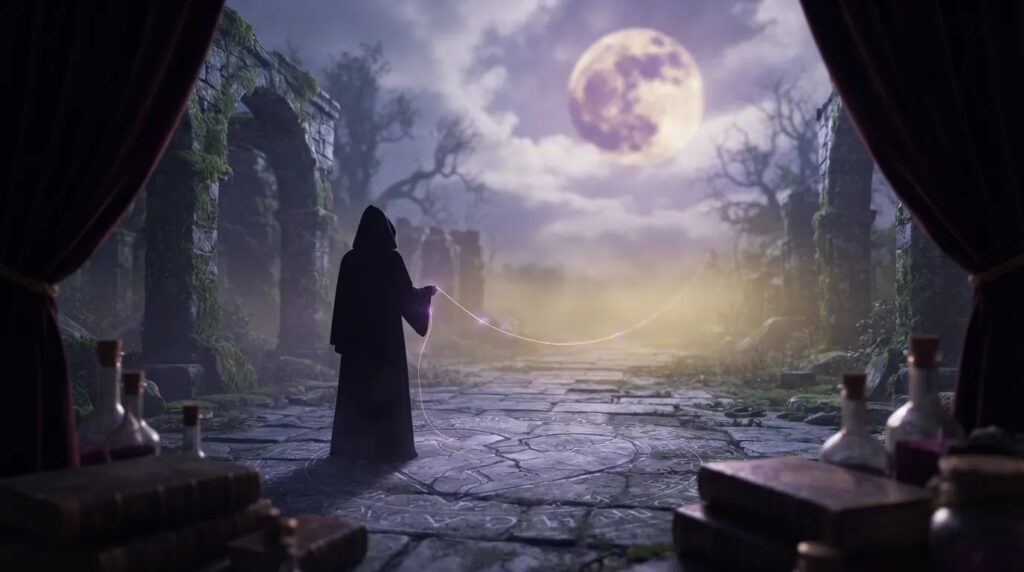

History Of Love Spells: Oral Roots: How the Tradition Actually Survived
In the Serer and Wolof traditions of Senegal, spiritual knowledge around love and binding work was never centralized into a single text. It lived in families, carried by practitioners who taught it directly to a chosen successor, usually across many years of apprenticeship rather than a single lesson. My own grandmother began teaching me pieces of this work when I was still a child, long before I understood what I was actually learning.
This method of transmission is part of why the tradition stayed intact. A written text can be copied badly, misread, or stripped of context by someone who never sat with a teacher. Oral tradition, passed hand to hand, carries the judgment and the caution along with the technique. You don’t just learn what a working does. You learn when not to do it, which is arguably the more important half of the training.
Love Ritual Across the Wider World
West African love and binding work sits inside a much larger global pattern. Ancient Mediterranean cultures left behind love charms and binding tablets, some inscribed on lead and buried near a temple in the hope the gods would notice. Medieval European folk practice built its own herb-based love magic, often tangled together with early medicine, since the same healer who treated a fever was frequently the same person consulted about matters of the heart.
Across Asia, love divination and ritual took different shapes again, often tied closely to astrology and lunar timing, a thread that shows up in this practice too, since moon phase still matters when I time a working today. Indigenous traditions across the Americas developed their own herb-based love and healing practices as well, frequently woven into the same body of knowledge that handled physical medicine, a pattern that echoes how West African practitioners were, and still often are, consulted for both spiritual and practical concerns in the same visit.
None of these traditions borrowed from each other in any direct way. They arrived at parallel conclusions independently, which says less about any one culture and more about how universal the underlying need has always been. What’s notable, looking across all of them, is how consistently serious cultures treated this work: not as parlor entertainment, but as something requiring real training, real caution, and real accountability to a community that would notice if it were misused.
01Ritual Materials Change, the Structure Doesn’t
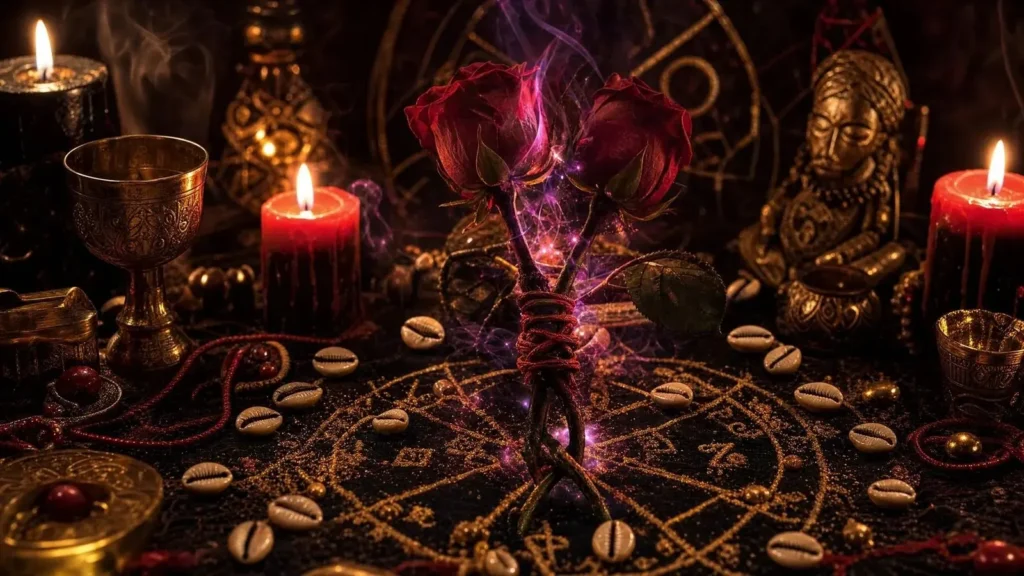
Candles, herbs, cowrie shells, lead tablets, carved wood: the specific materials shift by region and era, but the underlying structure, intention plus focused ritual plus timing, repeats across nearly every tradition on record.
02Divination Almost Always Comes First
Reading the situation before acting on it shows up again and again across unrelated traditions, from cowrie-shell casting to tarot to tea-leaf reading. Nobody worth their training skips straight to ritual without first understanding what’s actually happening.
03Lineage Was the Original Credential
Before certifications and reviews existed, a practitioner’s standing came entirely from who trained them and how long their family had practiced. That’s still the backbone of how trust works in this field, mine included.
From Cowrie Shells to a Free Phone Consultation
The tools of my own reading practice, cowrie shells cast onto cloth, come directly from Serer divination methods that predate any written record of them. What’s changed is not the reading itself but how a client first reaches a practitioner. My grandmother’s clients walked to her home. Mine call a phone number or fill out a form on a website. The technology around the practice modernized. The practice at its center did not.
The shells do not change with the century. Only the hands asking them a question do.— Senegalese Proverb
I think this matters for anyone deciding whether to trust a modern practitioner. A tradition this old carries its own quality control, built over centuries of trial, failure, and refinement by people with far more at stake in getting it right than any modern reviewer. That doesn’t make every self-described practitioner legitimate, but it does mean the underlying craft has a depth that a newly invented system can’t match.
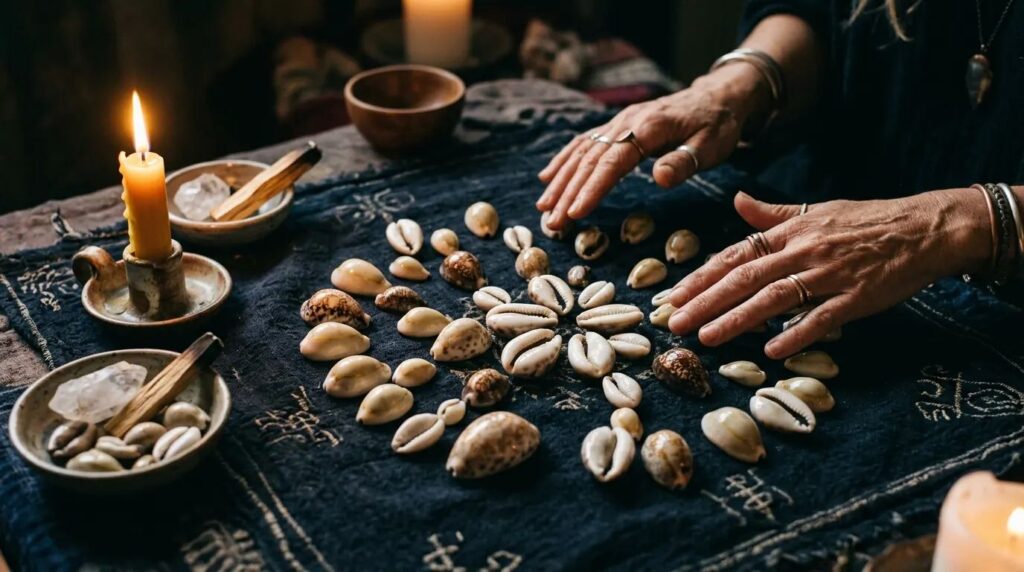
Why Divination Methods Rarely Change, Even When Everything Else Does
It would be easy to assume a centuries-old divination method would eventually get replaced by something more “modern,” the way most tools eventually do. That hasn’t happened here, and I think the reason is worth naming directly: a divination method isn’t really a piece of technology in the way a phone or a car is. Its accuracy comes from the practitioner’s trained relationship with it, built over years, not from the object itself being upgraded.
A new set of shells doesn’t read better than an old, well-used set. What changes with time and practice is the practitioner’s fluency, their ability to notice small patterns and read them accurately against everything they already know about how a situation like this one tends to unfold. That kind of fluency isn’t something a newer method could shortcut, which is a large part of why traditions like this one didn’t get replaced the way most old tools eventually are.
Curious What a Traditional Reading Actually Shows?
A free consultation includes an honest look at what’s active in your situation, using the same reading method this practice has relied on for generations.
Why This History Gets Distorted So Often
A lot of the mistrust around love spells traces back to how thoroughly this history has been flattened, mostly by media that treats every tradition, West African, European, or otherwise, as interchangeable “witchcraft” without bothering to understand any one of them. That flattening strips away the actual lineage, ethics, and structure that real traditions carry, and replaces it with a generic, often menacing caricature. If you want to see how deep that distortion runs, common myths about love spells walks through the specific claims that don’t hold up.
Understanding the real history is, in a strange way, the best protection against being misled by someone with no training claiming a tradition they don’t actually belong to. Lineage matters. It’s not a marketing detail. It’s the entire reason this practice has survived intact long enough to still be useful today.
How the Tradition Survived Disruption
West African spiritual practice, like indigenous spiritual traditions on nearly every continent, went through long periods where colonial authorities and missionary institutions actively discouraged or suppressed it, treating ancestral knowledge as something to be replaced rather than understood. This history is well documented broadly across the region, and it’s part of why oral transmission mattered so much. A practice that only exists on paper can be confiscated, burned, or banned outright. A practice carried inside a family, taught quietly across generations, is far harder to erase.
My own family’s line of teaching continued through periods when openly practicing this work would have drawn real scrutiny. That’s not a dramatic claim; it’s simply the reality many West African families with spiritual lineages navigated for generations, adapting how and where knowledge was passed on without losing the substance of it. What reached me is, as far as my teachers could tell me, largely intact, not because it went unchallenged, but because the people carrying it were careful and patient across a very long stretch of time.
It’s worth saying plainly that this history isn’t unique to this one tradition. Nearly every indigenous spiritual practice with deep roots, across Africa, the Americas, and beyond, carries some version of this same story: pressure to abandon it, quiet persistence anyway, and eventual survival through people who simply refused to let the knowledge disappear. I don’t tell it to claim special hardship. I tell it because it’s the honest backdrop to how seriously trained practitioners in these traditions tend to take the responsibility of carrying them forward.
I mention this not to dwell on the difficulty of it, but because it explains something about how seriously this tradition treats trust. Knowledge that survived deliberate suppression tends to be guarded carefully even now, taught slowly, and passed only to someone judged ready for it. That caution isn’t gatekeeping for its own sake. It’s a habit built from necessity that never fully wore off, even once the original threat had passed.

Sources and further reading
- University of Chicago: Ancient Greek Love Magic by Christopher Faraone: A classicist on the love spells and charms used in ancient Greece and who used them
- University of Illinois Press: Mojo Workin’ by Katrina Hazzard-Donald: Scholarly book on the history of Hoodoo as an African American spiritual tradition
- Encyclopedia.com: Wolof: Reference entries on Wolof history, homeland, religion and daily life in Senegambia
Related reading: Voodoo Love Spells.
Frequently Asked Questions
How old is the Serer and Wolof tradition specifically?
It predates written record, passed orally across generations, which makes an exact date impossible to give honestly. My own family’s practice spans at least seven known generations of direct teaching.
Did every culture historically practice some form of love spell?
Most did in some form, though the specific methods and beliefs behind them varied widely. The impulse to influence romantic outcomes through ritual appears across nearly every documented culture.
Is modern love spell practice the same as centuries ago?
The core structure, reading first, then preparation, then ritual, has stayed consistent. What’s changed is mostly the way a client reaches a practitioner, not the practice itself.
Why do you use cowrie shells specifically?
They’re the traditional divination tool in Serer practice, passed down through my training. Other lineages use other methods; this one is mine because it’s the one I was taught.
Does a longer lineage make a practitioner more trustworthy?
It’s one signal among several. Lineage shows depth of training, but honesty in how a practitioner talks to you day to day matters just as much.
What are common misconceptions?
The biggest one is treating every tradition as interchangeable “witchcraft.” They’re not — Serer and Wolof practice, Hoodoo, and Wicca each carry their own lineage, ethics, and technique, and flattening them into one caricature erases the real history behind each.
Where can I learn responsibly?
Start with serious anthropological or cultural-history sources rather than viral content, and if you want to understand a living practice specifically, ask a trained practitioner about their lineage directly rather than relying on secondhand accounts.
A Final Word From Baba Ali
I think about my grandmother often when I take a new client’s call, because the shape of what I’m doing, listening carefully, reading honestly, then deciding whether ritual is even the right next step, is exactly what she taught me by example long before I understood the words for any of it. This history isn’t decoration. It’s the reason I know what I know, and why I’m careful about how I use it.
If any of this history resonates with your own situation, or you’re simply curious what a traditional reading would show you, a free consultation is the place to start.
What the Ancient Texts Actually Say
Love magic isn’t a modern invention dressed up in old language — it has a documented paper trail going back thousands of years. The Papyri Graecae Magicae, a collection of Greco-Egyptian magical texts compiled between the 2nd century BCE and the 5th century CE, contains dozens of surviving love and attraction spells, many involving inscribed lead tablets, specific herbs, and invocations to deities like Aphrodite and Hekate. Ancient Mesopotamian cuneiform tablets record similar workings tied to Ishtar, goddess of love and war. These aren’t folklore summaries — they are original ritual instructions that survived on physical media for two thousand years.
A Timeline Across Cultures
- Ancient Egypt (c. 1500 BCE): Love spells inscribed on ostraca and papyri, often invoking Hathor, goddess of love and joy, using honey and red thread as core materials — a symbolic pairing still used in love work today.
- Ancient Greece and Rome: Binding spells (defixiones) inscribed on lead tablets and buried or thrown into wells, sometimes commissioning gods of the underworld to compel a lover’s attention — the ethically murkiest chapter in this history, and a clear ancestor of the coercive “black magic” caricature that persists today.
- Medieval Europe: Love magic moves into grimoires and courtly love traditions, blending Christian prayer formulas with older pagan practices, often practiced quietly by village healers alongside their herbal medicine work.
- West Africa, pre-colonial through present: Continuous, living traditions — including the Serer and Wolof lines I was trained in — where love work sits inside a broader ancestral and divinatory practice rather than existing as its own separate category.
- The African diaspora, 1500s onward: Enslaved West Africans carried these traditions to the Americas, where they evolved into Vodou in Haiti, Hoodoo in the American South, and related practices, adapting materials and language to a new environment while preserving core spiritual structures.
- Modern era: Wicca formalizes in the 20th century, New Age movements popularize crystal and candle work broadly, and the internet era brings both wider access to authentic teaching and a flood of commercialized, often fabricated “instant spell” content.
What Changed, and What Didn’t
The materials have shifted with what was available — lead tablets became parchment became printed grimoires became typed rituals — but the core structure has stayed remarkably stable across five thousand years: a clear intention, a symbolic material, a timing, and an invocation. What has genuinely changed is the ethical framework, which has moved steadily away from coercive binding toward consent-based, amplification-focused practice.
Figures History Associates With Love Magic
Cleopatra is frequently linked to perfumery and attraction ritual in ancient accounts, though the historical record blurs fact and legend considerably. Anne Boleyn was rumored by contemporaries and later folklore to have used charms to secure Henry VIII’s affection — almost certainly political slander rather than documented fact, but revealing of how love magic accusations were weaponized against powerful women throughout history. These stories matter less as verified fact and more as evidence of how long love magic has occupied the public imagination.
What Was Happening Simultaneously Across the World
One thing rarely covered in general histories of love magic: while Egyptian priests were inscribing love spells on papyrus around 1500 BCE, entirely separate love-ritual traditions were developing independently in ancient China, tied to matchmaking deities and household ancestor veneration, and among early Mesoamerican cultures, where cacao and specific flowers carried ritual significance in courtship practices. These traditions had no contact with one another, yet arrived at strikingly similar structural ideas — symbolic materials, timing tied to celestial cycles, and formal invocation of a higher power to assist in matters of the heart.
The Evolution of Ethics Across the Centuries
Ancient defixiones — the Greco-Roman lead-tablet binding curses — were often shockingly coercive by modern standards, sometimes explicitly demanding a target be unable to think of anyone else. Medieval grimoires soften this somewhat, blending love magic with Christian prayer and courtly ideals of mutual devotion. By the time Wicca formalizes in the mid-20th century, the ethical framework has shifted decisively toward consent and “harm none” principles. This isn’t a coincidence — it tracks a broader, centuries-long cultural shift away from viewing romantic partners as property to be won and toward viewing them as autonomous people whose will deserves respect, even within a magical framework.
West African Continuity, Specifically
Unlike many European traditions, which fractured, were suppressed, or had to be reconstructed from fragments after centuries of persecution, the West African traditions I come from — including the Serer and Wolof lines — maintained a largely unbroken chain of direct, in-person transmission from teacher to student, generation after generation, through the period of colonization and into the present. That continuity is part of why lineage documentation matters so much in my own practice: it isn’t a marketing credential, it’s the literal mechanism by which this specific tradition survived intact.
A Timeline Infographic, in Text
- c. 1500 BCE: Egyptian love charms inscribed on ostraca, invoking Hathor.
- c. 500 BCE – 400 CE: Greco-Roman defixiones and the Papyri Graecae Magicae.
- 500 – 1500 CE: Medieval grimoires blend older pagan practice with Christian formulas.
- 1500s onward: Transatlantic slave trade carries West African traditions to the Americas, giving rise to Vodou and Hoodoo.
- 1950s onward: Wicca formalizes publicly in England, later spreading internationally.
- 1990s–2010s: New Age movements popularize crystal and candle work broadly, often disconnected from any specific lineage.
- 2010s–present: Internet access brings both wider access to authentic teaching and a flood of fabricated, commercialized “instant spell” content, making it harder than ever for a newcomer to tell the two apart.
How Ritual Materials Changed With What Was Available
Ancient Egyptian practitioners used papyrus, ink made from soot and gum, and locally available herbs like coriander and myrrh. Greco-Roman defixiones required lead, a metal associated with the underworld and Saturn, deliberately chosen for its heavy, binding symbolism. Medieval European practitioners, often working in secret due to religious persecution, relied on whatever herbs a village healer’s garden could supply, disguised within otherwise ordinary medicinal remedies. West African traditions carried into the diaspora adapted to new environments entirely — using materials found in the American South that stood in for herbs and roots common in West Africa, while preserving the underlying ritual structure and intention. What stayed constant across every one of these material shifts was the underlying logic: a physical object made to carry symbolic weight, prepared with intention, and used at a deliberately chosen time.
A Note on What History Can and Can’t Tell Us
Much of what survives from ancient love magic comes from written records, which historically favored literate, often elite practitioners and clients. The everyday folk practices of ordinary people across most of this history went largely undocumented, passed down orally rather than in writing — which means the “history of love spells” that scholars can reconstruct is necessarily incomplete, weighted toward whoever happened to leave a written trace. My own family’s tradition is a good example: it survived through direct oral and practical transmission across generations, not through any text that a historian centuries from now could point to as proof it existed.
Why This History Actually Matters to a Client Today
It would be easy to treat this history as academic trivia, disconnected from someone deciding whether to book a consultation this week. I’d argue the opposite: understanding that love magic has a five-thousand-year, cross-cultural, continuously documented history changes how a modern client should evaluate any individual practitioner’s claims. A tradition that has survived and been refined across millennia, through persecution, colonization, and modernization, carries a weight and internal coherence that a practice invented last year on social media simply cannot match. When evaluating a practitioner, one honest question worth asking is not just “does this work,” but “where does this specific technique actually come from, and how long has it been practiced this way.” History, in that sense, is a practical due-diligence tool, not just a curiosity.
A Closing Reflection on Continuity
What strikes me most, having been trained within one small, specific link of this five-thousand-year chain, is how much of the underlying structure has stayed recognizable across radically different cultures that never had any contact with each other. A clear intention. A meaningful material. The right timing. A respectful invocation. Whether inscribed on Egyptian papyrus, cast into a Roman well, whispered in a medieval village, or performed at my own family’s altar in Senegal, that structure persists — which suggests it reflects something genuinely useful about how humans have always tried to navigate matters of the heart, not merely a passing cultural fashion.
A Thread Connecting Ancient and Modern Practice
The written intention — a plain statement of what you want, spoken or inscribed before any ritual begins — appears in some form across nearly every era covered in this history, from Egyptian ostraca to a modern client’s notebook. That continuity, more than any single ritual technique, is the clearest evidence that this practice has always centered on clarity of intention as its actual foundation, regardless of century or culture.
History like this is easy to romanticize and just as easy to flatten into a marketing bullet point, “30+ years, ancestral tradition,” repeated without any of the substance behind it. I’d rather clients understand the actual shape of it: a slow, careful chain of teaching, tested across generations of real people’s real heartbreak, not a slogan borrowed for effect.
If you’re the kind of person who wants to understand a practice before trusting it with something as personal as a relationship, that instinct is a good one, and this history is exactly the kind of thing worth asking about directly. A practitioner who can speak plainly about where their training came from, and how long it’s actually been carried, is usually one worth listening to further.
More Sacred Wisdom
Ready to Reunite With Your Soulmate?
If the signs are speaking to you, do not let the moment pass. Book a free consultation with Baba Ali today and discover the sacred path back to the love you deserve.