
How to Evaluate a Love Spell Caster Near You (or Remotely)
A Senegalese spiritual practitioner’s honest answer to the “love spell caster near me” search — why physical distance matters less than people assume, and how to verify legitimacy wherever a practitioner lives.
If you are typing “love spell caster near me” into a search bar right now, here is the direct answer: distance is almost never the thing that determines whether spiritual work actually helps you. Energy work is not bound by geography, and searching for “near me” usually narrows you down to whoever happens to have a storefront in your zip code, not whoever is actually skilled at this work. In thirty years of practice, I have watched people drive across a city to sit with a mediocre local reader while ignoring a genuinely trained practitioner three states away who could have helped them faster, more honestly, and for less money. This guide is about breaking that habit, and giving you a real way to evaluate any practitioner, local or remote, before you hand them your trust.
I am Baba Ali. I am a Senegalese spiritual practitioner, trained from childhood by my grandmother in the sacred Serer and Wolof traditions of ancestral love magic, and I have guided more than 5,000 clients across the United States toward reunion and connection. I serve clients remotely, across the entire country, and I have for most of my career. Not because I could not open a storefront somewhere, but because the work itself has never required one. What follows is the same evaluation process I would want a stranger to use on me, applied honestly and without a sales pitch attached to it.
Before You Read Further
This guide is about evaluating a practitioner, not about where they happen to live. If you already know a specific spellcaster’s name and want to check them for legitimacy, look for the same signals described below no matter what city their business address lists.

Local Vs Online Love Spell Caster: Why Physical Distance Doesn’t Limit Spiritual Work
I want to answer the geography question directly before anything else, because it is the assumption underneath almost every “near me” search. In my tradition, and in most serious spiritual traditions I have studied or encountered over three decades of practice, energy work operates through connection and intention, not through physical proximity. A working done on your behalf does not travel through the mail or drive across town to reach you. It moves through the same channel a prayer moves through when someone prays for a family member overseas: intention, focus, and a trained hand directing both.
Think about how much spiritual and religious practice already assumes this. A congregation prays for a sick relative in another country and nobody questions whether the distance weakens the prayer. A grandmother lights a candle for a grandchild she has not seen in person in years. None of that work requires the person praying and the person being prayed for to occupy the same room, and love spell work is no different in that respect. What actually determines whether a working is effective is the skill and integrity of the person performing it, the client’s honesty about their situation, and the specificity of the ritual itself — not the number of miles between the practitioner’s altar and the client’s front door.
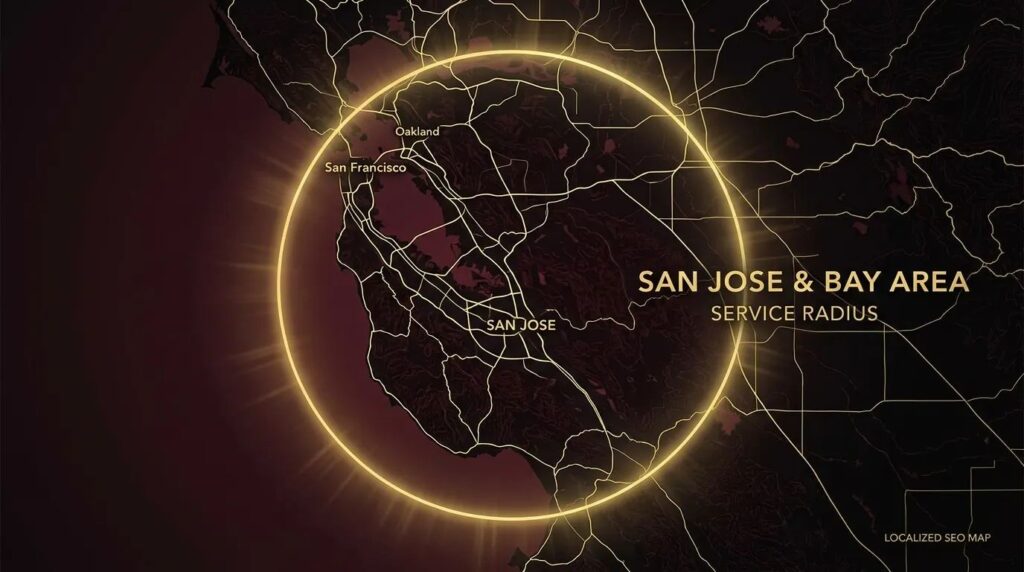
None of this means location never matters at all. If you specifically want an in-person ritual you can watch, or a face-to-face relationship with someone you can visit for tea, that is a legitimate preference and you should look for a local practitioner who offers it. But if your actual goal is a genuine, effective working performed by someone skilled and honest, “near me” is the wrong filter. The right filter is competence, ethics, and communication, and those three things exist independently of a zip code.
The Real Risks of Prioritizing “Nearby” Over “Legitimate”
Here is the practical problem with a “near me” search: it artificially shrinks your options down to whoever happens to have set up shop within driving distance, and in most American cities, that is a very small and not particularly vetted pool. A metro area might have two or three storefront readers, one botanica, and a handful of people advertising on local classifieds. That is not a marketplace. That is whoever was willing to rent a space, which has nothing to do with whether they actually know what they are doing.
Local scammers understand this dynamic better than most clients do. A physical storefront on a busy street corner signals legitimacy to a lot of people, purely because it exists in the physical world and looks permanent. It is easy to assume that someone who pays rent on a shop must be established and trustworthy. In reality, a storefront is just overhead. It tells you nothing about training, lineage, ethics, or results, and it makes it easier for a local operator to lean on convenience and foot traffic instead of on an actual track record. I have had clients describe walking past the same “psychic” storefront for years, finally going in because it was five minutes from their house, and leaving having spent hundreds of dollars on vague readings and upsold candles with nothing to show for it.
There is a second risk that is less obvious: local reputational pressure works in the wrong direction sometimes. A practitioner operating in a small, tight-knit local market may be reluctant to tell a client something they do not want to hear, because word travels fast in a small radius and a blunt but honest answer can cost future local business. A practitioner with a national client base has less of that particular incentive distorting their honesty, simply because no single client’s reaction determines their local reputation the way it would in a town of thirty thousand people.
None of this means every local practitioner is dishonest, and it does not mean every practitioner working remotely is trustworthy either. It means proximity is not a proxy for quality in either direction. Judging a practitioner by how close they are to you, rather than by how they answer your questions, is the actual risk here — and it is the risk this guide exists to help you avoid.
How to Evaluate Any Practitioner, Regardless of Location
This is the section that matters most, so I will keep it concrete. Whether you are looking at someone two blocks away or two thousand miles away, these are the six things I would check before trusting anyone with a love spell request. I use the same standard on myself, and I would expect a client to hold me to it.
01A Real Consultation, Not a Product Page
Legitimate spiritual work starts with a conversation, not a checkout button. A practitioner worth trusting will ask about your specific situation before recommending anything, because the right approach depends entirely on the details — how long you have been apart, what actually happened, whether a third party is involved, what you are hoping for realistically. If a website lets you add a fixed-price “Love Spell” to a cart with no conversation at all, that is not spiritual work. That is retail dressed up as ritual.
02A Specific, Named Tradition
Ask what tradition the practitioner works in, and expect a real answer. I work in Senegalese Serer and Wolof ancestral love magic, trained into me by my grandmother from childhood — that is specific, checkable, and consistent every time someone asks me. A practitioner who cannot say where their practice comes from, or who claims a vague blend of “ancient” or “universal” magic with no origin at all, is usually improvising.
03Realistic Timelines
Genuine ritual work takes time to complete and time to unfold afterward. In my practice, the ritual itself is completed within three to seven days, and results continue to develop after that. Anyone promising an instant reunion overnight, or guaranteeing an exact date someone will call, is telling you what you want to hear rather than what is true.
04Stated Ethical Boundaries
A practitioner should be able to tell you, without hesitation, what they will not do. I decline requests to override someone’s free will, to work against a person’s genuine wellbeing, or to target someone who has clearly and permanently moved on. If a practitioner claims they can “make anyone do anything” with no boundaries at all, that is not a sign of power. It is a sign they will tell a client anything to close the sale.
05A Verifiable Track Record
Look for consistency over time, not a handful of curated testimonials on a single page. A practitioner with decades of practice, a documented number of clients served, and a track record that holds up across years rather than a recent rebrand deserves more trust than a newly launched profile with dramatic before-and-after claims and nothing behind them.
06Professional Communication
Pay attention to how a practitioner actually talks to you, not just what they claim. Clear answers to direct questions, patience with your uncertainty, no pressure tactics, and no rushing you toward payment before you feel ready are all signs of someone running a serious practice rather than a high-volume script.
Notice that not one of these six things has anything to do with location. You can run this checklist on a storefront three miles from your house or on a practitioner you found through a referral in another state, and it will tell you the same thing either way: whether this is someone worth trusting.
Want an Honest Read on Your Situation First?
A real consultation costs nothing and does not commit you to anything. Ask direct questions, and judge the answers by the standard in this guide.
A candle burns the same whether it is lit next to you or a thousand miles away. What matters is the hand that lit it. — Senegalese Proverb
What Remote Consultation Actually Looks Like
Because the “near me” instinct is really about wanting something tangible and trustworthy, it helps to walk through what a remote consultation looks like in practice, step by step, so it stops feeling abstract. It is a lot less mysterious than people expect, and a lot more like any other professional service conducted over distance.
It usually starts with a phone call or a video call, scheduled at a time that works for you, where you describe your situation in your own words. I ask questions the way any careful practitioner would: how the relationship started, what led to the separation, what you have already tried, and what you are hoping for. This conversation is where I decide whether I can genuinely help, and it is also where you get to judge whether I sound like someone worth trusting, using the six points from the section above.
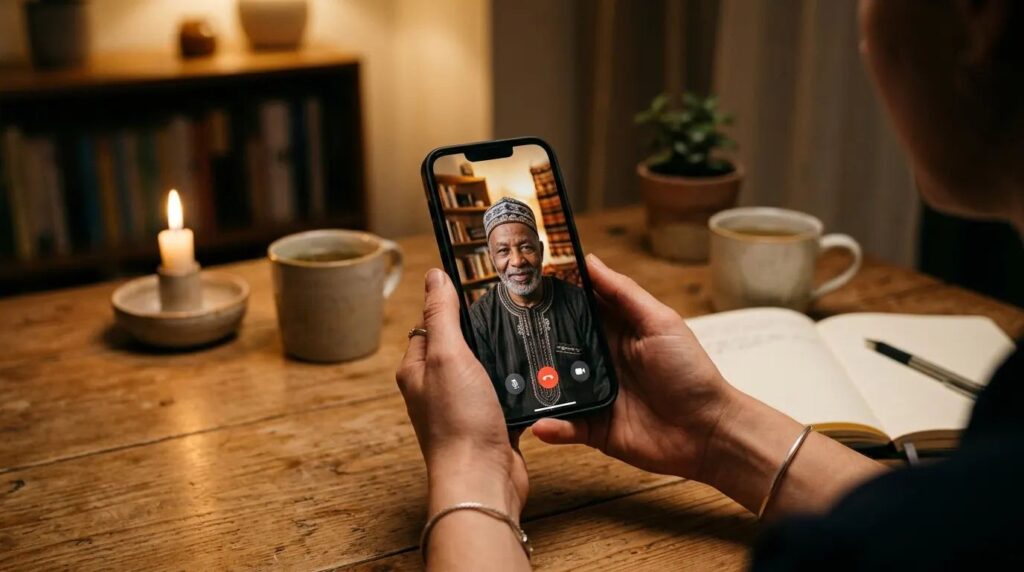
After that first conversation, if a working is appropriate, you send whatever the practitioner needs — usually a full name, a photo if one is available and comfortable to share, and any relevant details about the situation. A legitimate practitioner handles this information carefully and privately, the same way you would expect a doctor’s office or a counselor to handle sensitive details, and never pressures you into sharing more than you are comfortable with.
Once the ritual begins, you should expect updates, not silence. I keep clients informed as the three-to-seven-day working progresses, and I am reachable if something feels unclear or if new circumstances come up that I should know about. This is also where remote practice tends to outperform a rushed in-person visit: a storefront reading is often a single thirty-minute appointment squeezed between walk-ins, while a remote relationship built around calls, updates, and follow-up can actually track your situation over the full course of the work.
None of this requires the practitioner to live in your city. It requires a phone, a working internet connection, and someone on the other end who takes the process seriously.
Red Flags Regardless of Location
Some warning signs show up in local storefronts and remote practices alike, and they deserve their own section because they are the fastest way to rule someone out before you invest time or money.
The biggest one is escalating cost. A practitioner who starts with a modest fee and then tells you, partway through, that a “blockage” or “curse” was discovered and a much larger payment is now required to remove it, is running a well-documented scam pattern, whether their office is next door or across the country. I do not charge a fee for the spell itself; clients cover only the cost of ritual materials, and that cost is fully refunded if the working does not bring results. A structure like that leaves very little room for the escalating-fee trick, because there is nothing to escalate.
Vague, generic readings that could apply to almost anyone are another red flag. If a practitioner tells you things that sound true of nearly every person who has ever loved and lost someone, without asking a single specific question about your actual situation first, they are reading you, not the work. Guaranteed, specific outcomes are a third flag — nobody can promise you an exact date or a certain yes, because the work respects the other person’s free will, and any practitioner claiming otherwise is overselling. Pressure to decide immediately, refusal to answer direct questions about method or tradition, and an unwillingness to have any real conversation before payment round out the list. All five apply exactly the same way whether you found the practitioner on a street corner or through a national search.
Why National Reach With Genuine Skill Beats Local Convenience With Mediocre Skill
I will say plainly what I believe after thirty years of doing this work: a genuinely skilled practitioner serving clients across the whole country is a better bet than a mediocre one who happens to share your zip code. Skill and integrity are rare enough that they do not distribute evenly across every city and town. Narrowing your search to “nearby” narrows you out of most of the people who could actually help you, for a reason that has nothing to do with whether they can help you.
Serving clients nationwide also changes what a practitioner is accountable to. A local operator can survive on convenience and low expectations because there is limited competition within driving distance. A practitioner with clients across the country has to earn every single one of them on the strength of the consultation, the honesty of the process, and the actual outcome, because that client had the entire country to choose from and chose to stay. That is a stronger accountability structure than proximity ever was.
This does not mean every remote practitioner is better than every local one, and I am not arguing that convenience has no value at all. What I am arguing is that convenience should never outrank the six evaluation points in this guide. Use those points first. Let location be the tie-breaker, if it matters to you at all, after legitimacy is already established — not the other way around.
If you want a deeper look at how to spot a genuine practitioner from the ground up, our companion guide on how to find a real love spell caster in the USA covers the broader vetting process in more depth. And if cost is part of what is steering you toward “near me” out of convenience, it is worth reading an honest breakdown of what a love spell actually costs before assuming local is cheaper. It usually is not.
A client called me two years ago only after driving to three different local storefronts first, spending more on those visits combined than she ultimately spent with me. Each one gave her a different vague read on her situation, and none of them asked about her actual relationship before recommending a working. By the time she reached out for a remote consultation, she was skeptical of the whole idea of paid spiritual work, and that skepticism was earned. What changed her mind wasn’t distance — it was a longer conversation, specific questions about her situation, and an honest timeline instead of a guaranteed date. Her case is not unusual. Local convenience gets tried first simply because it’s visible, and remote practitioners often only get a fair chance once the nearby options have already failed to deliver.
One more thing worth naming here, because it is often the deciding factor without anyone saying it out loud: the practitioners who build a genuine national reputation tend to standardize their process because they have done it thousands of times, across every kind of situation a client can bring them. A practitioner who only serves a small local pool has, by definition, seen fewer cases, which means less pattern recognition when something unusual comes up in your specific situation. Volume is not proof of quality by itself, but a wide, sustained client base over decades is much harder to fake than a storefront sign.

Sources and further reading
- FTC Consumer Advice: How To Avoid a Scam: Four common signs of a scam, such as pressure to act fast and pay by gift card or wire
- Florida Attorney General: prison sentence for a so-called psychic: Case of a self-described psychic sent to prison for taking a large sum from a client
Frequently Asked Questions
Does a love spell work better if the practitioner lives near me?
No. Effectiveness comes from the practitioner’s skill, honesty, and the specificity of the ritual, not from physical distance. Energy work has never required the practitioner and client to be in the same room.
Is it safer to work with someone local because I can meet them in person?
Meeting in person can feel reassuring, but it is not a safety guarantee. A storefront tells you someone pays rent, not that they are honest or skilled. Judge safety by the evaluation points in this guide: real consultation, named tradition, realistic timelines, stated ethics, verifiable track record, and professional communication.
How does a remote practitioner actually perform the ritual without meeting me?
The consultation happens by phone or video, and the practitioner works from the details you share, the same way a practitioner would work from information gathered in an in-person meeting. The ritual itself does not require your physical presence, only your honest information and intention.
What should I have ready before a remote consultation?
A clear, honest account of your situation is the most important thing. A full name and a photo can help, but nothing more sensitive than that should ever be required, and you should never feel pressured to share more than you are comfortable with.
How do I know a remote practitioner isn’t a scam if I can’t visit their office?
Use the same six checks that apply to any practitioner: a real consultation before payment, a specific named tradition, realistic timelines, stated ethical limits, a track record that holds up over years, and professional, non-pressuring communication. None of these require an office visit to verify.
Should I ever choose a local practitioner over a remote one?
If in-person contact genuinely matters to you and you have found a local practitioner who passes the same evaluation, that preference is entirely valid. The point of this guide is not that remote is always better, but that “near me” alone should never be the deciding factor.
Does it cost more to work with a practitioner who lives outside my state?
No. Distance has no bearing on what a working costs. You’re paying for the practitioner’s time, skill, and the materials the ritual itself requires, not for mileage or a local business’s overhead. A client three towns over and a client three thousand miles away pay the same rate for the same kind of request, and any practitioner who quotes a higher price purely because you live far away is pricing convenience, not spiritual work.
What affects the cost?
Not location — the complexity of the case and the materials it genuinely calls for. A recent, uncomplicated situation needs less than one involving years of separation or third-party interference.
A Final Word From Baba Ali
I understand the instinct behind a “near me” search. Wanting something you can see and touch and drive to feels safer than trusting a voice on a phone call. But safety in this work has never come from geography. It comes from asking the right questions, listening carefully to the answers, and refusing to hand your trust, or your money, to anyone who will not earn it honestly. I have served clients across this entire country for most of my career, and the ones who did best were not the ones who lived closest to me. They were the ones who asked good questions before they ever committed to anything.
Wherever you are in the country, and wherever a practitioner you are considering happens to be, run them through the same six points in this guide before you trust them with something as personal as a love spell request. If you would like to see how I hold up against that standard myself, I am glad to have the conversation, and the first one costs nothing but your honesty. For more on choosing the right kind of working once you have found someone trustworthy, our guide on custom versus generic love spells is a natural next read.
Local consultations: love spell caster in Atlanta, love spell caster in Baltimore, love spell caster in Boston, love spell caster in Las Vegas, love spell caster in New Orleans, love spell caster in Portland, love spell caster in Raleigh.
More Sacred Wisdom


Ready to Reunite With Your Soulmate?
If the signs are speaking to you, do not let the moment pass. Book a free consultation with Baba Ali today and discover the sacred path back to the love you deserve.