People write to me at all hours asking the same question in a hundred different ways: why do you keep talking about ancestors when I just want to know if he’s coming back? I understand the impatience. But in the tradition I was raised in, you don’t separate the two questions. Love does not live in a vacuum. It lives inside a family line, and that line does not end with the people currently breathing. This begins with connecting with ancestors for love guidance.
I was taught this by my grandmother before I was taught almost anything else. She kept a small corner of her room for the dead — not out of fear, not as decoration, but because she believed, and I have come to believe, that the people who loved us before we existed are still paying attention. When a granddaughter’s marriage was struggling, my grandmother did not just pray to a distant, abstract God. She sat at that corner and spoke to her own mother, and her mother’s mother, by name.
This is what I mean by connecting with your ancestors for love guidance. It is not a metaphor. It is a practice, and it is one of the oldest tools I know for understanding what is actually happening in your relationships — not what you wish were happening, not what a stranger on the internet tells you is happening, but what your own lineage, which has watched people love and lose and reconcile for generations, can tell you.
I want to walk you through what this means in West African spiritual practice, why ancestors specifically matter for love and relationship questions, how to build a simple and safe home ritual for connecting with them, what it might feel like when they respond, and where this practice sits next to the spellwork I’m more commonly asked about. I’ll also be honest about where the boundaries are — what a home ritual can do, and what it can’t, and when you need someone trained to go further. If you’re new to spiritual practice generally, it also helps to understand how love spells work before we get to how ancestor guidance fits alongside them.
What Ancestor Guidance Means in West African Spiritual Practice (Connecting With Ancestors For Love Guidance)
In the tradition I practice, which draws on West African spiritual roots, the dead are not gone. They are relocated. Death changes a person’s form, not their relationship to the family. Your great-grandmother does not stop being your great-grandmother because her body is no longer here. She becomes something closer to a quiet, permanent member of your household — one who cannot cook for you or hold your hand, but who can still see the shape of your life and, under the right conditions, can still nudge it.
This is different from ancestor worship, a phrase I hear used carelessly and one I want to correct directly. We do not worship our ancestors. Worship is reserved for the divine, for the Creator, for the spiritual forces that sit above all of us including the dead. What we do with our ancestors is closer to consultation, honoring, and relationship maintenance — the same things you’d do with a living elder whose wisdom you trust and whose feelings you don’t want to hurt through neglect.
Every family, in this way of thinking, carries its own small spiritual government. There are ancestors who specialized, in life, in certain kinds of wisdom — a great-aunt known for her marriages, an uncle known for reading people accurately, a grandmother who could tell within a week whether a suitor was serious or wasting your time. Death does not erase that specialty. If anything, it sharpens it, because they now see more than they could while alive and distracted by their own worries.
An elder who trained me described it this way: the living see one room of the house. The ancestors see the whole house, because they are no longer standing inside any single room. That is the value of asking them anything, love included. They’re not guessing based on gut feeling the way we do. They’re looking at the full floor plan.
Recent Ancestors vs. Distant Ancestors
Not all ancestors occupy the same place in your life, and it helps to understand the difference before you start. Recent ancestors — a parent, a grandparent, someone you actually knew — tend to be the easiest to reach, because you already have a relationship with them. You know their voice, their opinions, the particular way they’d raise an eyebrow at a bad decision. Connecting with them often feels less like reaching into the unknown and more like continuing a conversation that paused rather than ended.
Distant ancestors — the great-great-grandmother whose name you may not even know, the founders of your family line generations back — are a different kind of presence. You don’t have personal memories to draw on, so the connection tends to feel less like a conversation and more like a general sense of support or steadiness. That doesn’t make it less real. In my experience, distant ancestors often carry the deepest patterns, because they’re the ones who set the pattern running in the first place. If there’s a repeated story in your family of love found late, or love that had to survive real hardship, it usually traces back further than anyone currently living remembers.
I tell clients to start with whoever feels closest and easiest, almost always a recent ancestor, and let the practice widen naturally from there. You don’t need to reach for the oldest, most mysterious branch of your family tree on your first attempt. Build trust with one relationship before you try to open five.
There’s one more distinction worth naming: ancestors by blood and ancestors by choice. Not everyone has a comfortable relationship with their biological family line, and that’s a real and common situation. If a blood relative caused you harm, you are under no obligation to seek their guidance on love or anything else. Many traditions, including the one I practice, recognize spiritual grandparents, godparents, and chosen elders as legitimate ancestors to honor once they’ve passed, particularly if they were the ones who actually showed you what steady love looked like.
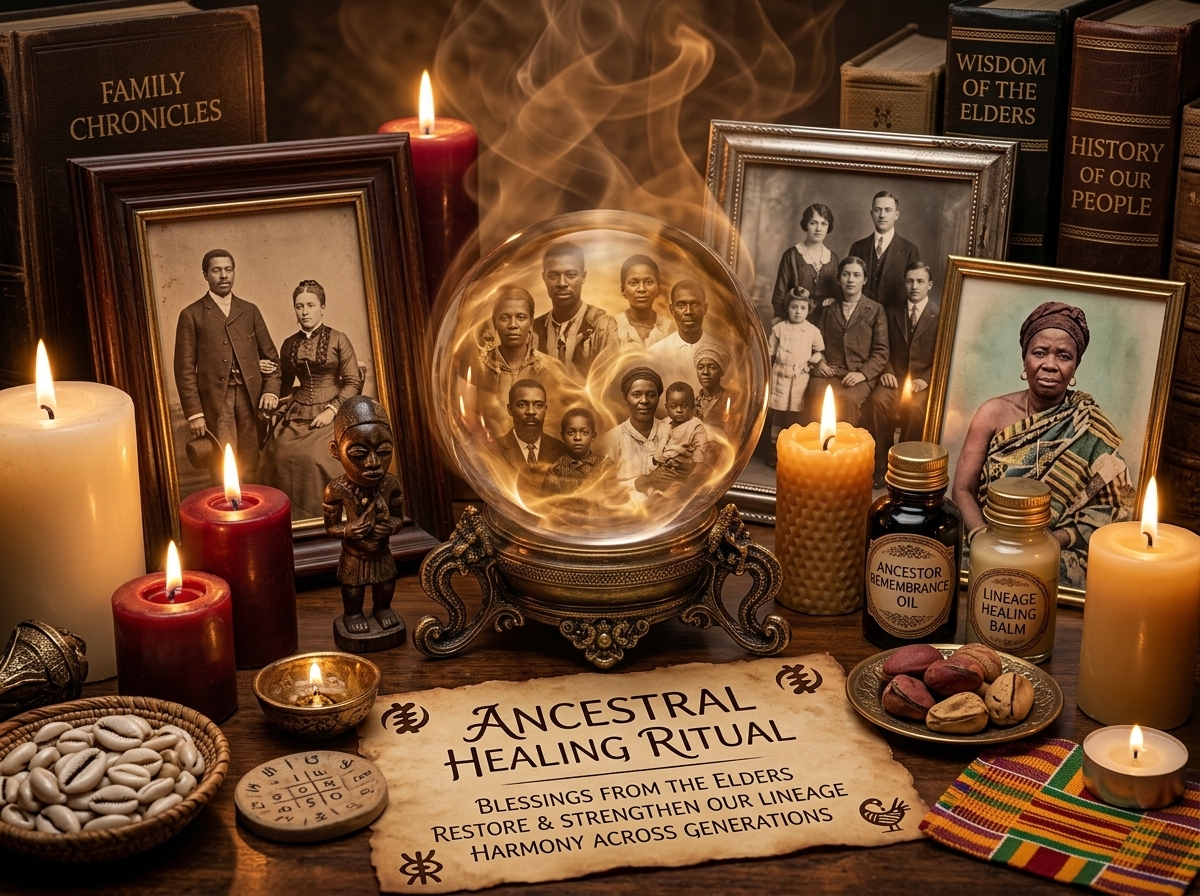
Why Ancestors Are Consulted Specifically for Love and Relationships
I get asked why love is such a common reason people reach for ancestor guidance rather than, say, career questions or health concerns. There’s a real reason for this, and it has to do with what love actually is inside a family system.
Your capacity to love, to trust, to stay, to leave — none of that was built by you alone. It was shaped by patterns that ran through your family long before you arrived. If your mother struggled to trust men, there’s a reasonable chance you inherited some version of that struggle, even if nobody sat you down and taught it directly. If your grandfather was the kind of man who came back after wandering, that pattern lives somewhere in the family’s memory too, whether anyone talks about it or not.
Ancestors are consulted for love specifically because they are the ones who lived those patterns first. They know where the family’s wounds are. They know which choices led to long, steady partnerships and which ones led to heartbreak repeated across three generations. When you ask an ancestor about your relationship, you are not asking a stranger with no context. You are asking someone who has a direct stake in whether this pattern continues or finally breaks.
There’s also a simpler, more practical reason. Love decisions are usually made under emotional pressure. You’re anxious, you’re hopeful, you’re hurt, and all of that noise makes it hard to see your situation clearly. Ancestors, having no body and no adrenaline running through it, are not caught in that noise. Their perspective tends to arrive calmer than your own thoughts do, which is often exactly what’s needed when you’re circling the same worry at two in the morning.
I want to be honest about something else, too. Not every ancestor is a good guide. Just as living people can be bitter, controlling, or wrong about love, the dead carry their personalities with them. Part of learning this practice is learning which ancestors in your line were wise about love and which ones you should listen to more carefully, weighing their advice rather than following it blindly. This is one reason a trained hand is useful — to help you tell the difference. If you’re not sure whether you need this kind of ancestral clarity or a more direct reading first, this guide on signs you need a psychic reading before a love spell can help you figure out where to start.
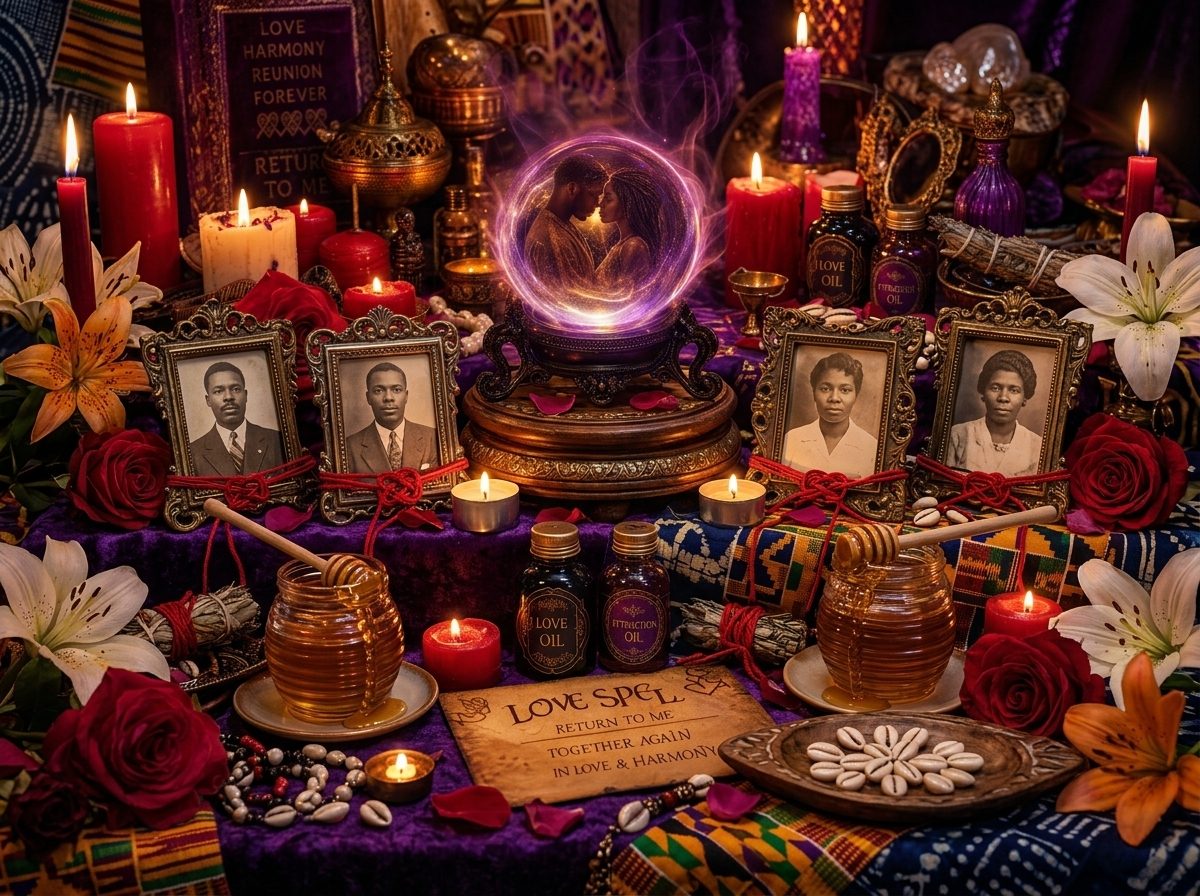
A Simple, Safe Home Ritual for Connecting With Your Ancestors
I’m going to give you something you can actually do, not a vague suggestion to “feel their presence.” This is a basic, low-risk way to open a line of communication. It will not replace the deeper work a practitioner does, but it’s a real starting point, and it’s safe for a beginner.
Setting Up a Small Altar
You don’t need an elaborate setup. A shelf, a small table, or even a cleared corner of a dresser works. What matters more than the furniture is what you place there.
- A photograph of an ancestor, if you have one. If you don’t, a written name works just as well — write it clearly on plain paper.
- A white candle. White is used broadly across many traditions to represent clarity, peace, and openness, rather than any specific request.
- A glass of water. This is one of the oldest offerings there is — simple, universally understood, and a sign of hospitality rather than demand.
- Something the ancestor liked in life, if you know it. Coffee, a certain flower, a piece of fruit. This detail matters more than people expect — it tells the ancestor you remember them as a specific person, not a generic idea.
The Offering
Light the candle. Set the water down. If you brought something they enjoyed, place it beside the photo or the name. This isn’t a transaction — you’re not paying for a favor. It’s closer to setting a table for a guest you respect and want to feel welcome. — a pattern Gottman Institute has documented as well.
Quiet Reflection
Sit in front of the altar and be still for a few minutes. Some people speak out loud. Some people write a letter first and read it aloud after. Either is fine. Say who you are, which is more important than it sounds — many people in a family line, so be specific about your name, your parents’ names if you know them, and what you’re asking about.
Then ask your question plainly. Not “please fix my relationship,” which is too vague to act on, but something closer to “I want to understand whether I should keep trying with this person, or whether I’m holding on to something that already ended.” Specific questions get clearer answers, in my experience, both from the living and the dead.
Sit for a few more minutes after you’ve spoken. You are not obligated to feel something dramatic. Most people don’t, especially the first few times. Consistency matters more than intensity here.
Closing
Thank them, whether or not you felt anything. Let the candle burn down safely, or extinguish it if you must leave, and relight it another day. Leave the water out for a day, then dispose of it outside rather than pouring it down a drain — a small gesture of respect that many traditions share. If your space feels heavy or unsettled before you begin, it’s worth doing a basic home cleansing ritual first, so you’re opening this line of communication in a clear environment rather than a cluttered one.
How Often to Practice This
People often treat this like a one-time event — light a candle, ask a question, wait for a sign, get frustrated when nothing happens by the next morning. That’s not how the relationship builds. Think of it the way you’d think of getting to know a distant relative you’re only just meeting. One conversation rarely tells you everything. A pattern of conversations does.
I recommend once a week to start, on whatever day is easiest to keep consistent, rather than waiting for a crisis to prompt you. Some of the clearest guidance I’ve seen people receive came during ordinary weeks, not desperate ones, because a calm mind is easier for anyone, living or dead, to reach. If a real question comes up between your regular sessions, you’re welcome to sit at the altar again, but the weekly rhythm is what actually builds the connection over time.
What Not to Attempt Without Guidance
I want to be direct about the limits of a home ritual, because I’ve seen people get hurt — not physically, but spiritually and emotionally — by going further than they were prepared for.
Do not attempt to summon a specific, named spirit you don’t have a documented family connection to. Do not try to “bind” an ancestor to perform a specific task, especially anything involving controlling another living person’s feelings or decisions — that crosses out of honoring and into something else entirely, and it is not something I do or teach. Do not use ancestor work to try to contact someone who died under circumstances your family considers unresolved or unsafe to revisit without proper preparation. And if you start to feel persistently disturbed, anxious, or unable to sleep after beginning this kind of practice, stop and speak to someone trained, rather than pushing through alone.
A simple altar and a quiet conversation are safe. Anything that starts to feel like a negotiation, a demand, or a summoning of something you can’t name is where a beginner should stop and ask for help.

Signs of Ancestral Guidance and Response
People often ask me how they’ll know if it worked — if the ancestors actually heard them. I wish I could give a tidy checklist, but the truth is the signs are usually quiet rather than dramatic, and they show up in a handful of common forms.
The most frequent one is dreams. Not every dream about a deceased relative is a message, but a dream that feels unusually vivid, that you remember clearly for days, or in which the person speaks to you directly rather than simply appearing, is worth paying attention to. Write it down as soon as you wake. Details fade fast, and the specific words matter.
Another common sign is a sudden, unexplained clarity about a decision you’d been stuck on for weeks. You sit with your question, and a day or two later, without dramatic fanfare, you simply know what you should do. People often describe this as the noise in their head going quiet.
Some people notice small physical signals — a particular scent associated with the ancestor appearing without an obvious source, a song that was meaningful to them playing at an unlikely moment, a repeated number or object showing up. I don’t put too much weight on any single coincidence, but a pattern across several days is different from one random event.
And sometimes the answer comes through another person entirely — a friend says exactly the thing you needed to hear, using a phrase your grandmother used to use, without knowing anything about your ritual. Ancestors don’t always speak directly. Sometimes they work through the people already around you.
What I tell clients who feel discouraged because nothing dramatic happened: the absence of a lightning-bolt moment doesn’t mean the practice failed. Most ancestral guidance builds slowly, through repetition, not through a single decisive sign. Give it real time before deciding it isn’t working.
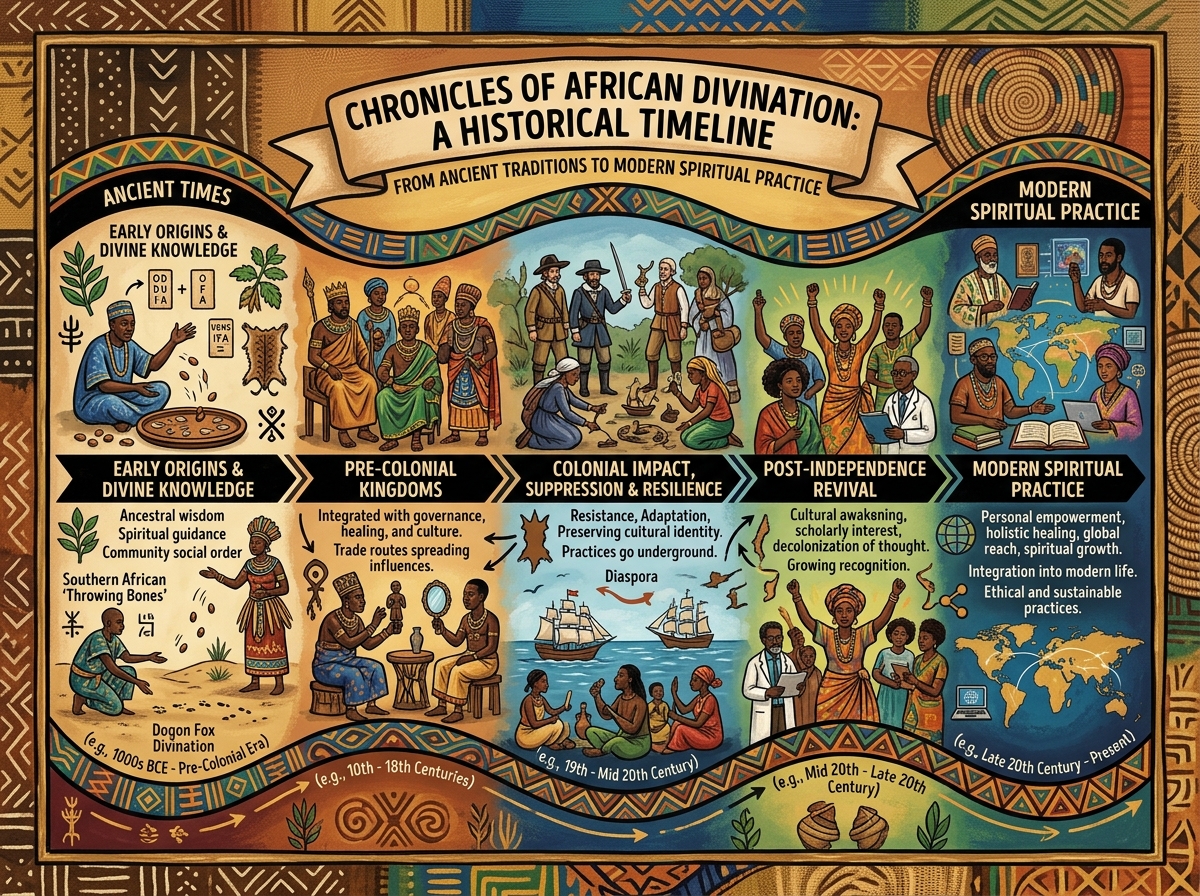
How This Differs From, and Complements, Spellwork
I want to separate two things that people sometimes blend together: ancestor connection and the spellwork I’m more commonly known for. They are related, but they are not the same tool, and they don’t do the same job.
Ancestor guidance is primarily about understanding. It answers questions like: what is really going on here, what pattern am I repeating, should I stay or should I go, what does my family’s history tell me about this situation. It is diagnostic. It helps you see clearly before you decide anything.
Spellwork, in the tradition I practice, is a different kind of action — a request for spiritual assistance around a specific outcome, done with materials, ritual, and time, never with a guaranteed result and never on a fixed timeline. It’s closer to a deliberate action than a diagnosis.
In practice, the two often work together. A client comes to me confused about a relationship. Before I would ever consider spellwork, I want clarity about what’s actually happening — and ancestor guidance, either mine or theirs, is part of building that clarity. Acting on a situation you don’t understand rarely goes well, spiritually or otherwise. Understanding first. Action second, only if it’s warranted.
I’ll also say plainly what I say to every client: I do not charge for spiritual work itself. If someone comes to me for guidance, including help interpreting ancestral contact, there is no fee for my time or the reading. If a ritual requires physical materials — candles, herbs, specific items — the client covers the cost of those materials, because I am not going to absorb material costs indefinitely. And if someone experiences a result they’re grateful for, they’re welcome, never required, to leave a free-will donation afterward, as gratitude, not as payment for a promised outcome. Nobody is ever guaranteed a specific result or a specific timeline, and anyone who tells you otherwise is not being honest with you. If cost is part of what’s holding you back from reaching out, I’ve written honestly about what spiritual work actually costs and why it’s structured the way it is.
Common Misconceptions About Ancestor Work
A few things I correct often enough that they’re worth addressing directly.
The first is the idea that ancestor work is inherently dark, spooky, or dangerous. It isn’t. Sitting quietly with a candle and a glass of water, speaking to someone you loved or someone in your line, is one of the gentlest spiritual practices there is. The danger, when it exists, comes from going beyond that — attempting summonings or bindings without training, which I already addressed above.
The second misconception is that you need elaborate knowledge of your family tree to do this. You don’t. If you know one name, start there. If you know no names, you can still address “my ancestors” as a group, and in my experience, that works fine. The relationship matters more than the genealogy.
The third is that ancestors will only speak about “big” life questions — marriage, death, major decisions — and won’t bother with something as ordinary as whether you should text someone back. That’s not been my experience or my teaching. Love, in all its small daily decisions, is exactly the kind of thing a family line has generations of experience with. No question is too small.
The fourth, and this one matters most, is the belief that if you do the ritual correctly, you’re guaranteed an answer, and if you’re not getting one, you did something wrong. That’s not how it works. Some ancestors are more active than others. Some periods of your life are quieter than others, spiritually. Patience is part of the practice, not a sign of failure.
Frequently Asked Questions
Do I need to know my ancestors’ names to connect with them?
No. It helps if you do, because a name is a strong point of connection, but you can absolutely begin by addressing your ancestors collectively — “the ones who came before me” or “my family line” — and build from there as you learn more names over time.
What if my family history includes people I don’t want to connect with?
You are never required to reach out to every ancestor. Focus on the ones you have a positive or at least neutral relationship with, even if you never met them. You can be selective. This isn’t an all-or-nothing practice.
How long before I notice anything?
There’s no fixed timeline, and I’d be lying if I told you otherwise. Some people notice a dream or a moment of clarity within the first week. For others, it takes longer, sometimes a few months of steady practice. Consistency matters more than any single session.
Is this the same as spellwork or a ritual you’d perform for me directly?
No. This is a personal practice you can do at home to build understanding. If you want deeper guidance or a reading, that’s something I can help with directly, and there’s no charge for that conversation. Spellwork is a separate, more involved kind of request that we’d only discuss once you understand your situation clearly.
Can ancestor guidance tell me if someone will come back to me?
It can offer perspective on the pattern, the timing, and what’s realistic — but no honest spiritual practitioner will tell you a guaranteed outcome or an exact date. What ancestor guidance tends to offer is clarity about whether you’re waiting for something real or holding on to something that’s already finished.
Do I need to be part of a West African spiritual tradition to do this?
No. Ancestor connection in some form exists across nearly every culture on earth. What I’ve described here is rooted in the tradition I was raised in, but the underlying practice — honoring, remembering, and listening to those who came before you — belongs to anyone willing to approach it with respect.
What if I try this and feel nothing at all?
That’s common, especially early on. Keep the practice simple and consistent rather than escalating it. If weeks pass with no sense of connection and you want a second perspective, that’s a good time to reach out for a proper reading rather than guessing on your own.
Can I do this if I don’t know anything about West African spiritual tradition?
Yes. Nothing here requires prior study or membership in any specific tradition. What matters is sincerity and respect, not credentials. I’ve walked complete beginners through this same process with good results, as long as they approached it patiently rather than expecting instant answers.
What’s the difference between doing this myself and having you do a reading?
When you do this yourself, you’re building a personal, ongoing relationship with your own ancestors, which only you can really do. When I do a reading, I’m using my own training and years of practice to interpret spiritual information more directly, often faster, and with the benefit of experience recognizing patterns you might miss on your own. The two aren’t competing. Many clients do both — their own home practice, plus an occasional reading with me when they want a second, trained set of eyes on what they’re seeing.
If You Want Help Going Further
Everything above is something you can do on your own, safely, at home. But I also know that love situations are rarely simple, and sometimes what you need isn’t a ritual — it’s someone who’s spent over thirty years doing this work to sit with you, hear the specifics, and tell you honestly what your situation looks like.
If you’ve tried connecting with your ancestors and want help understanding what came through, or if you’d rather start with a direct reading instead, I offer a free consultation where we talk through what’s actually going on before anything else is decided. No pressure, no guaranteed outcomes promised, no fee for the conversation itself — just an honest look at where you stand.

Written by Baba Ali
Baba Ali is a West African spiritual practitioner with 33+ years of experience in love spells and spiritual healing, serving clients across the United States.
View credentials & lineage →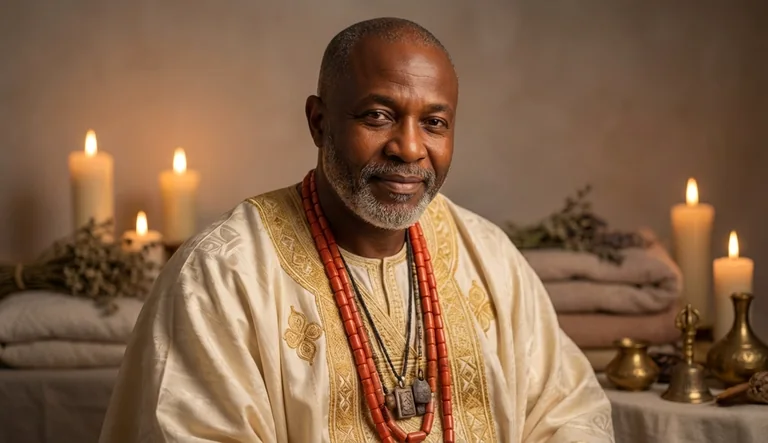
Leave a Reply