
Verified Love Spell Caster Reviews: How to Spot Real Ones
A practical guide to telling a genuine love spell caster review from a staged one, followed by a look at Baba Ali’s verified credentials and how to check them yourself.
Verified love spell caster reviews should contain specific details that can be checked rather than vague praise. This guide explains how to evaluate identity, timing, credentials, and patterns that may reveal fake feedback.
How to Check Verified Love Spell Caster Reviews
Authentic, verified love spell caster reviews are rare online, and most of what shows up in a search is not built to help you tell real ones from fake ones. It is built to make every practitioner on the page look equally trustworthy, because that is how the page gets paid. If you have spent any time searching for a real spell caster, you have probably noticed the pattern: five-star grids with no dates, testimonials that read like ad copy, and “verified” badges that verify nothing at all. This guide is the opposite of that. It gives you a working method for telling a genuine review from a staged one, then shows you exactly how Baba Ali’s own credentials and client reviews hold up when you run them through that same method.
I am Baba Ali. I am a Senegalese spiritual practitioner, trained from childhood in the Serer and Wolof traditions of ancestral love magic, and I have spent more than 30 years guiding clients across the United States through reunions and reconnections, working with over 5,000 people along the way. I did not write this guide to flatter myself. I wrote it because the review problem in this industry is real, it costs people money and hope, and almost nobody selling spiritual services online has an incentive to teach you how to see through the noise. I do, because I would rather you trust me for the right reasons than the wrong ones.What This Guide Will Not Do
It will not hand you a star rating or a review count and ask you to take it on faith. It gives you a method first, so you can apply it to any practitioner you are considering, not only me. Then it shows you what happens when that method is applied here.How to Tell a Real Love Spell Caster Review From a Fake One
Fake reviews in this industry tend to share a handful of tells, once you know to look for them. Real ones share a different set of qualities, and they show up together more often than not. Here is the checklist I give people who ask me how to protect themselves before they hand money or trust to anyone, myself included.01 A Specific Timeline, Not a Vague One — Verified Love Spell Caster Reviews
A real review almost always names a rough timeframe: “about three weeks after,” “within the first ten days,” “it took nearly two months before anything changed.” A fake review skips this, because whoever wrote it has no actual event to date. With that in mind, if every review on a page reads like it could have been written the same afternoon, that is a signal worth taking seriously.02 Emotional Nuance, Including Doubt
Genuine clients rarely write pure praise from start to finish. They mention being skeptical at first, or nervous about the cost, or unsure whether anything was actually happening until a specific moment changed their mind. A review with zero hesitation anywhere in it, only certainty and gratitude, reads more like marketing copy than a lived account.03 No Guaranteed-Outcome Language
Watch for phrases like “he will absolutely come back” or “guaranteed results in days.” No honest practitioner can promise what another person will do, and no honest client would repeat that promise as fact after the work was done. A real review tends to describe what shifted, not what was guaranteed.04 A Named, Checkable Practitioner
Reviews attached to a real name with a documented history are worth more than reviews attached to a username or an anonymous storefront. You should be able to find the practitioner’s own credentials page, their background, and consistent information about them across the site, not just a rotating cast of five-star quotes with no author behind them.05 Dated and Traceable
A real review usually carries a date, or at least enough context to place it in time, and it should be consistent with everything else the practitioner says about their history. If a site’s “reviews” have no dates at all, or the dates cluster suspiciously around a single week, that pattern is worth noticing rather than ignoring.06 Costs Disclosed, Not Hidden Behind the Praise
Real reviews sometimes mention cost directly, because cost was part of the actual experience. A page that only ever shows glowing outcomes and never once touches on what anything cost, or how the pricing was explained, is usually hiding the part of the transaction that matters most to a skeptical reader.Red Flags to Walk Away From
A few patterns are close to disqualifying on their own. Stock photography standing in for “client photos,” identical sentence structure repeated across supposedly different reviewers, a page that refreshes with new five-star reviews every single day, and a practitioner who cannot be found anywhere outside the review page itself. None of these prove fraud by themselves, but stacked together they describe a page built to look trustworthy rather than to be trustworthy, and that distinction is the whole point of this guide.Why Fake Reviews Are So Common in This Industry
It helps to understand why this problem is worse here than in most other categories of online shopping. Spiritual work is intangible in a way a blender or a pair of shoes is not. You cannot hold the result in your hand and compare it against a product photo. That makes the entire transaction rest on trust almost from the first click, and trust is exactly what a fabricated review is designed to manufacture cheaply. With that in mind, a blender review can be checked against a real object that either works or does not. A spell caster review depends almost entirely on the reader believing the story behind it, which is precisely why the story matters so much and why it gets faked so often. There is also very little enforcement in this space. A false claim about a physical product can trigger a platform takedown or a regulatory complaint. A vague, unfalsifiable claim about “energy” or “spiritual alignment” almost never does, because there is no simple test anyone can point to that proves it wrong. That gap is exactly where dishonest operators tend to cluster, and it is exactly why the burden of verification falls on you as the reader rather than on any outside authority policing the space for you. None of this means every practitioner online is dishonest. It means the incentives favor confident, unfalsifiable language over the messier, more specific kind of account a real client actually gives you. Once you see the incentive clearly, the checklist above stops feeling like paranoia and starts feeling like ordinary due diligence, the same kind you would already apply before hiring a contractor or choosing a doctor.
What “Verified Practitioner” Actually Means at TopSpellsUSA
The word “verified” gets attached to almost anything online, so it is fair to ask what it means here specifically, rather than take the label at face value. In my case, it points to a documented history: more than 30 years practicing within the Serer and Wolof traditions I was trained in from childhood, a consistent public record of that background across every page of this site, and a client history spanning more than 5,000 people across the United States. None of that is a badge issued by a third party. It is a track record you can check against my own credentials page, cross-reference against how I describe my training in every article I write, and test yourself in a free consultation before you decide anything. That last part matters more than it might seem. A credential you cannot question is not much of a credential. I would rather you read my full background on By Baba Ali’s Credentials And judge it against the standard laid out above than simply accept “Verified Practitioner” as a label and move on. The whole method in this guide only works if you apply it here too, not just to the practitioners you are suspicious of.A Lineage, Not a License
Spiritual practice like this does not come with a government-issued certificate. What it comes with is a lineage: who trained you, how long you have practiced, and whether your account of that history stays consistent over years of public work. That consistency is what “verified” is standing in for here, and it is checkable in a way a printed certificate on a wall never really is.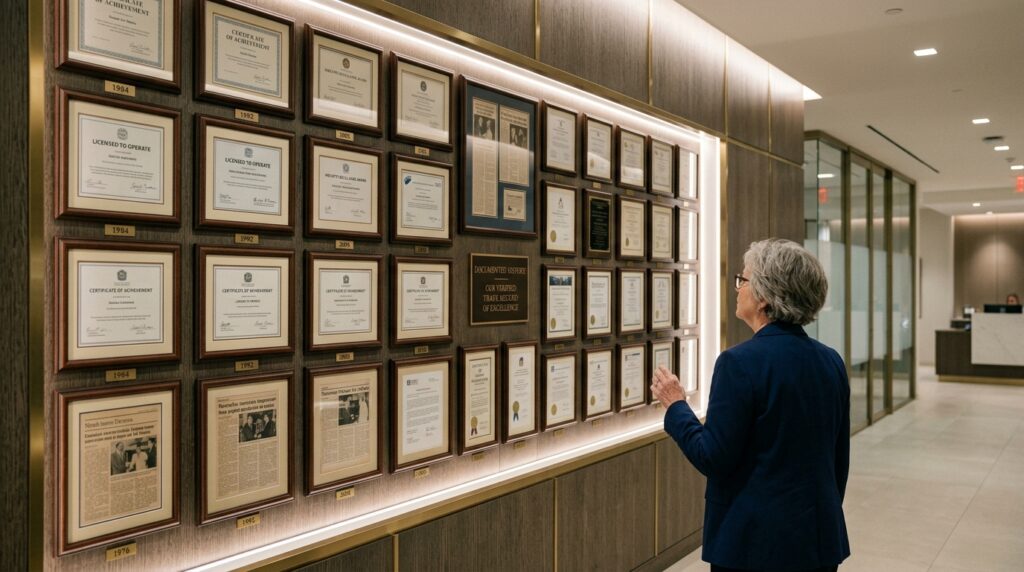
The Track Record Behind the Reviews
With that in mind, I want to be direct about what I will and will not claim here, because this exact section is where a lot of sites lose their credibility. I am not going to hand you a specific review count or a percentage figure and ask you to trust it, because a number with no audit trail behind it is exactly the kind of unverifiable claim this whole guide is warning you about. What I can tell you plainly is this: I have practiced for more than 30 years, and in that time I have worked with more than 5,000 clients across the United States. That is the scale of the practice. It is not a marketing statistic dressed up to look precise; it is simply how long I have done this work and how many people have come through it. If you want the fuller picture, including how that history is documented over time rather than asserted in a single sentence, my At the same time, breakdown of the track record behind this practice goes into more depth than a review page ever could. Read it the same skeptical way you would read anyone else’s numbers. That is the point.A number nobody can question is not proof. It is just a sentence with digits in it. — Baba Ali

What Real Client Reviews Actually Sound Like
Apply the checklist above to an actual review page and the difference becomes obvious fast. A staged review reads like a slogan: short, superlative, interchangeable with a dozen others on the same page. A genuine one reads more like a conversation you overheard. It mentions the specific thing that made someone nervous going in. It names roughly how long they waited before anything felt different. It hedges in places a marketing writer would never allow a hedge to survive, because the person writing it lived through the uncertain middle part, not just the ending. That is what I want you to look for when you read reviews anywhere, not only on this site: less polish, more texture. A review that admits the writer almost didn’t go through with it, or that describes a specific conversation rather than a generic feeling, is doing something a fabricated review almost never bothers to do, because texture is harder to invent than praise. I keep the full, unedited set of client reviews on a dedicated page rather than cherry-picking a handful for the homepage, precisely so you can apply this same test yourself across the whole set rather than a curated sample. You can read them directly at TopSpellsUSA Reviews, and I would genuinely rather you read them critically than take my word for any of it. One more thing worth watching for: consistency of voice across a set of reviews. Real people write differently from each other. Sentence length varies, some reviews are three lines and some are three paragraphs, word choice shifts from one person to the next because different people actually wrote them at different times about different situations. Fabricated review sets are often written in a single sitting by one person trying to sound like many, and that produces a subtle sameness across the whole page: similar sentence rhythm, similar vocabulary, similar structure from top to bottom, even when the names attached to each one are different. With that in mind, it is not always obvious on a first read, but if you read ten reviews back to back and they start to blur into one long paragraph in your memory, that blurring is itself information.
See the Proof Beyond a Short Quote
Text reviews are the easiest format to fake, which is exactly why they should not be the only evidence you weigh. Full case studies are harder to fabricate convincingly, because they involve real context: what the situation actually was, what the reading showed, what the working addressed, and what happened over the following weeks, told with enough detail that it either holds together or falls apart under scrutiny. I publish full case histories separately from the short review quotes for exactly this reason. If a five-line testimonial is not enough for you, and it should not be, the longer format gives you more to actually check. You can read several of them in full at Love Spell Case Studies, and I would encourage you to read at least two or three rather than one, since patterns across multiple cases tell you more than any single story can.Cross-Checking a Practitioner Across the Whole Internet
Do not stop at a single site’s own review page, mine included. A practitioner’s reviews should hold up when you look for them somewhere the practitioner does not control directly. Search the practitioner’s name alongside words like “complaint” or “scam” and read what actually comes back, rather than assuming silence means a clean record. Sometimes it genuinely does. Sometimes it means the practitioner is too new or too obscure to have generated any conversation at all, which is its own kind of information. Look for consistency across time as well as across platforms. A practitioner who has been publicly discussing their work for years, under the same name, with a story that has not shifted or been rewritten to match whatever is trending, is harder to fake than a page that appeared six months ago with a polished five-star history already attached. Age and consistency are not proof of honesty on their own, but a practice with nothing behind it tends to be thin exactly where a real one is not: no older articles, no history predating the current review push, no trace of the same name doing this work before the current site existed. I bring this up because it cuts both ways, and I want you to hold me to the same standard. Search for Baba Ali and TopSpellsUSA outside of this site’s own pages. Look at how long the domain has existed, whether the story stays consistent, and whether what you find elsewhere lines up with what is written here. A practice that is what it claims to be should survive that kind of check comfortably. One that is not, usually will not.Verify It Yourself Before You Decide Anything
The most reliable verification step is not a review at all. It is a free 30-minute consultation where you can ask about my training, my history, and your own situation directly, and judge the answers for yourself.The Free Consultation Is Itself a Verification Step
With that in mind, most guides about spotting fake reviews stop at the review page. I want to push one step further, because the single best verification tool in this entire process is not a review, a credential, or a case study. It is a live conversation. A free 30-minute consultation lets you ask direct questions, listen to how they are answered, and notice whether the person on the other end sounds like someone who has actually done this work for decades or like someone reading from a script written by someone else. Ask about the training. Ask what a reading actually involves before any working is discussed. Ask what happens if the situation described does not have a real connection underneath it worth working on. A practitioner with a genuine, long-standing practice will have specific, consistent answers to all three, because they have answered those exact questions hundreds of times before. Someone who is not what they claim to be tends to get vague fast, or steer the conversation back toward urgency and payment before you have finished asking. I offer this consultation free precisely because it is the strongest piece of verification I can give you, stronger than any review on any page, including my own. If you have read this far because you are trying to decide whether any of this is real, that conversation is where the decision actually gets made, not on a review page. You can also read the honest answers to the questions people ask most before booking anything at the full love spell FAQ, and see how the whole practice is framed ethically at Ethical Love Spell Practice, since the two go together more than most sites let on.
Use This Method Everywhere, Not Just Here
I want to end this section with something most sites in this space will never tell you: do not stop applying this checklist once you land on a page you like. Run it against every practitioner you are seriously considering, including the ones whose reviews feel the most convincing at first glance, because polish and persuasion are not the same thing as honesty. A page that has clearly been written to sound trustworthy is not automatically less trustworthy than one that has not, but it deserves exactly the same scrutiny, not less. The reason I can afford to teach you how to see through fake reviews is simple. I am not worried about what a careful reader finds when they check. Thirty years and five thousand clients is either a real history or it is not, and unlike a star rating with no source, that kind of claim gets harder to fake the longer it has to hold up under attention, not easier.
Sources and further reading
- Federal Trade Commission (2024): Final Rule Banning Fake Reviews and Testimonials: The federal rule against fake or bought reviews, hidden insider reviews and suppressed bad ones
- FTC Consumer Advice: How To Avoid a Scam: Four common signs of a scam, such as pressure to act fast and pay by gift card or wire
- Florida Attorney General: prison sentence for a so-called psychic: Case of a self-described psychic sent to prison for taking a large sum from a client
Frequently Asked Questions
Are online love spell caster reviews usually fake?
Not all of them, but the format makes faking easy and cheap, so a healthy amount of skepticism is warranted on any site, including this one. With that in mind, apply the checklist in this guide rather than trusting a star rating alone, and look for the traits real reviews tend to share: specific timelines, admitted doubt, and no guaranteed-outcome language.How is TopSpellsUSA verified as a real practitioner?
Through a consistent, checkable history rather than a third-party badge: more than 30 years of practice in the Serer and Wolof traditions, a documented public record across this entire site, and a client history of more than 5,000 people. You can read the full background at From Baba Ali’s Credentials and test it directly in a free consultation.What should a real review include that a fake one usually won’t?
A rough but specific timeline, some genuine hesitation or doubt somewhere in the account, and language that describes what shifted rather than promising a guaranteed outcome. Fabricated reviews tend to skip all three because none of them are easy to invent convincingly.Does TopSpellsUSA guarantee results?
No, and any practitioner who does is telling you something you should not believe. What can honestly be offered is a genuine reading, an honest assessment of whether a real connection exists to work with, and more than 30 years of experience doing that assessment carefully rather than promising a specific outcome up front.What is the fastest way to check if a specific review is real?
Look for a named, checkable person behind it rather than an anonymous quote, and see whether the practitioner’s own credentials and history stay consistent across the site. A free consultation is the strongest single verification step available, since it lets you ask direct questions and judge the answers yourself.A Final Word From Baba Ali
I did not write this guide to win an argument about who has the best reviews, and I am not interested in convincing anyone through sheer repetition of the same five claims dressed up in different sentences. I wrote it because I would rather lose a client to healthy skepticism than gain one who never bothered to check anything at all. If you take one thing from this article, take the checklist, and use it everywhere you look, not only here. Notice the specific timeline, the admitted doubt, the absence of guaranteed-outcome language, the named practitioner you can actually verify. When you are ready to apply that same scrutiny to my own practice, I would welcome it. Thirty years and more than 5,000 clients is a claim that either holds up to a direct conversation or it does not, and the only way to know which is to have that conversation yourself, free of charge, before you decide anything at all.Verified love spell caster reviews are most useful when they include specific experiences, consistent timelines, and details that match independently checked credentials.
Local consultations: love spell caster in Atlanta, love spell caster in Baltimore, love spell caster in Boston, love spell caster in Las Vegas, love spell caster in New Orleans, love spell caster in Portland, love spell caster in Raleigh.



Ready to Reunite With Your Soulmate?
If the signs are speaking to you, do not let the moment pass. Book a free consultation with Baba Ali and discover the clearest next step for your situation.