
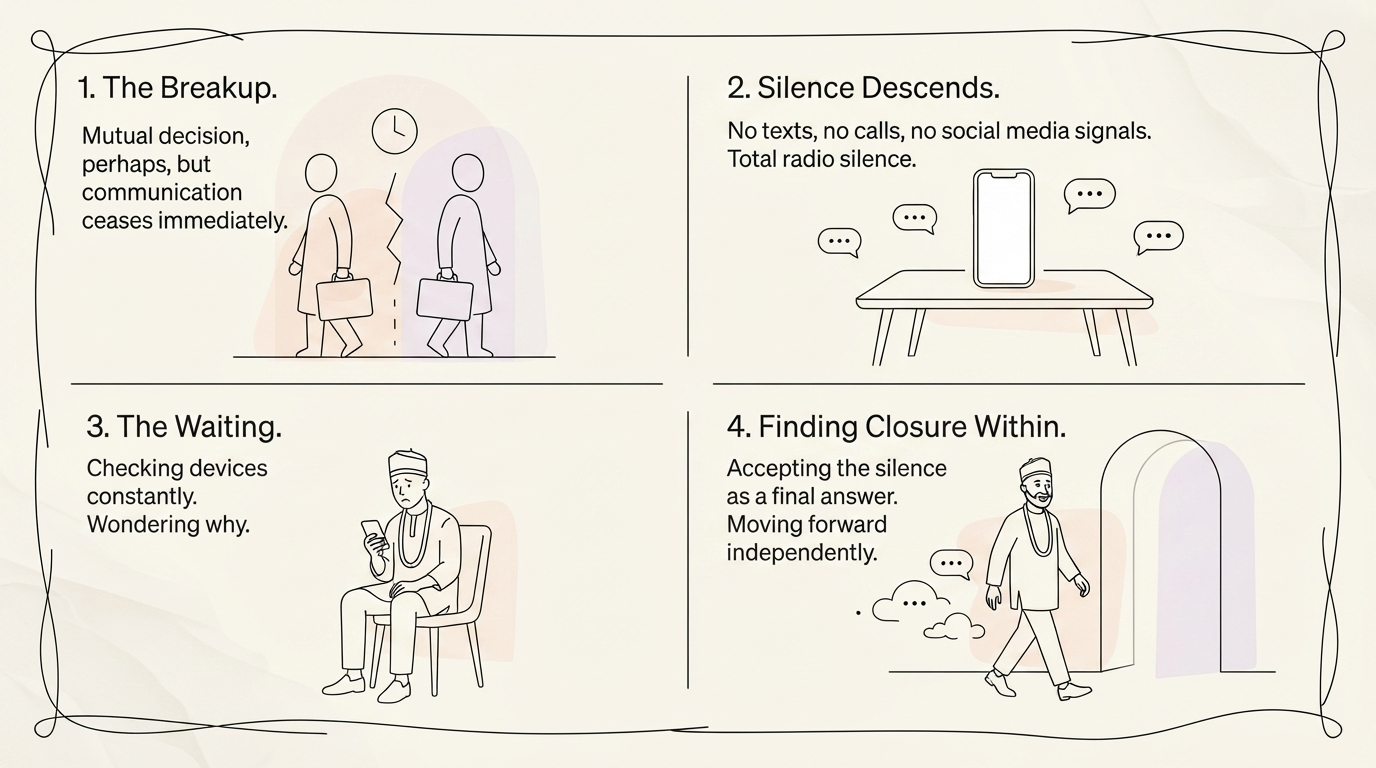
⏳ Situational Magic
Getting Back Together After a Toxic Relationship
A Senegalese spiritual practitioner’s honest, safety-first answer to whether getting back together after a toxic relationship is ever the right call, and how to tell the difference between toxic and dangerous before you decide.
Getting back together after a toxic relationship is sometimes the right choice and sometimes a mistake that costs a person years, and the difference almost never comes down to how much either person still loves the other. It comes down to one question I ask before any other in consultation: was the toxicity a pattern two flawed but safe people fell into, or was it a pattern one person imposed on the other through fear, control, or harm? If the honest answer is the second one, I will tell you plainly, right at the start of this guide, that reunion is not the work I recommend. If the honest answer is the first one, there is real work to be done, and I will walk you through exactly what it looks like.
I am Baba Ali. I am a Senegalese spiritual practitioner, trained from childhood by my grandmother in the Serer and Wolof traditions of ancestral love magic, and I have guided more than 5,000 clients across the United States toward reunion with a 95% success rate over more than thirty years of practice. I say this upfront because it matters for what comes next: reunion is the work I am known for, and it would be easy for me to tell every client what they want to hear. I don’t. Some of the hardest conversations I have are the ones where a client asks me to help bring back someone I believe they are safer without. This guide is written from that same place. It will not tell you reunion is always possible. It will tell you, as clearly as I know how, when it genuinely might be and when it should not be attempted at all.
Please Read This First
If your relationship involved physical violence, threats to your safety, sexual coercion, or control over your money, your movements, or your contact with family and friends, this guide is not a roadmap back to that relationship, and no spiritual work I or anyone else performs can make that person safe to return to. If that describes your situation, please reach out to the National Domestic Violence Hotline at 1-800-799-7233, available 24 hours a day, or a local domestic violence advocate, before you make any decision about reunion. Your safety comes before any ritual, any love, and any hope that this time will be different.
Toxic vs. Abusive: The Distinction That Decides Everything
People use the word “toxic” to describe almost any relationship that hurt them, and I understand why. It’s a word that gives shape to pain that otherwise feels formless. But in thirty years of sitting across from clients describing their relationships, I’ve learned that “toxic” actually covers two very different situations, and confusing them is the single most dangerous mistake a person can make when weighing reunion.
A toxic-but-workable relationship is one where two people, both acting from their own wounds and immaturity, built bad patterns together. Both people contributed. Both people can name their part, at least eventually. Neither person is afraid of the other, even in the relationship’s worst moments. The harm comes from things like poor communication, unresolved insecurity, external stress that neither partner managed well, or two people who genuinely love each other but never learned healthy conflict. This kind of toxicity is real and it hurts, and it is also, with real work from both people, sometimes repairable.
An abusive relationship is a different thing entirely, and I want to be direct about this because softening the language does no one any favors. Abuse is a pattern where one person establishes power over the other through fear, control, manipulation, isolation, or physical harm. It is not mutual in the way toxic-but-workable patterns are mutual. One person is doing something to the other, consistently, and the other person is managing, coping, or surviving it. Fear is the marker that separates the two. If a client tells me they were afraid, not just hurt or frustrated but genuinely afraid of what their partner might do, say, or become, that is not a toxic relationship in the sense I mean here. That is an abusive one, and the calculation around reunion changes entirely.
This distinction matters because the healing path is completely different depending on which one you’re in. Toxic-but-workable relationships can sometimes be repaired through honest communication, therapy, and real behavioral change, and spiritual work can support that repair once real change has already begun. Abusive relationships require something else first: safety, distance, and often professional support that has nothing to do with reconciliation. I will not perform reunion work, and I do not believe any responsible practitioner should, when a client describes patterns of fear, control, or physical harm. That isn’t a policy I apply reluctantly. It’s one I hold firmly, because I’ve watched what happens when people return to relationships that were never safe to return to.

Honest Signs It Is Not Safe to Reconsider Reunion
I want to give you something more concrete than a definition, because when you’re inside a relationship, or grieving the end of one, clarity is hard to find on your own. These are the signs I listen for in consultation that tell me reunion should not be on the table, at least not until the situation has changed in fundamental, verifiable ways.
01You Felt Afraid, Not Just Hurt
There is a real difference between “I was frustrated and lonely in that relationship” and “I felt afraid of what would happen if I said the wrong thing.” If the second one describes any real stretch of your relationship, that fear is information, not an overreaction.
02Any Physical Harm Occurred, Even Once
Pushing, grabbing, restraining, throwing objects, or any physical act meant to intimidate or hurt you is not a “toxic pattern” to be worked through together. A single incident is a pattern-in-waiting, and I’ve never seen a case where I could recommend reunion after this without professional intervention first.
03You Were Cut Off From People Who Cared About You
Isolation from friends, family, or financial independence is one of the clearest markers of control rather than mutual dysfunction. It rarely happens by accident, and it rarely reverses on its own.
04Apologies Were Never Followed by Change
If you’ve heard “I’ll never do that again” more than twice about the same behavior, the pattern has already answered the question of whether change is coming.
None of these signs require all four to be present. Even one, held honestly, is reason enough to pause and seek outside support, whether that’s a therapist, a domestic violence advocate, or simply a trusted friend who can see your situation without the fog that love and hope naturally create.

A Side-by-Side Comparison: Workable Patterns vs. Abusive Patterns
Clients often ask me for something they can hold onto later, in a quiet moment, when the pull to reunite is strongest and the clearest thinking is hardest to access. This table is what I give them. It’s not exhaustive, and no single row decides anything on its own, but as a whole picture it tends to make the distinction obvious even to someone standing too close to see it clearly.
| Toxic but Potentially Workable | Genuinely Abusive |
|---|---|
| Both people can name specific things they did wrong | One person is blamed for everything, including the other’s reactions |
| Arguments are frustrating but you never fear physical harm | Arguments carry real fear of what might happen next |
| Both people’s friends and family remain part of the picture | One partner is gradually cut off from support systems |
| Apologies are followed, over time, by visible behavior change | Apologies repeat with no change in the underlying behavior |
| Finances and major decisions are shared or discussed | One partner controls money, access, or decision-making unilaterally |
| You feel smaller after conflict but not unsafe | You feel unsafe, on edge, or unsure what will trigger a reaction |
| Both partners can describe the relationship’s problems similarly | Reality is frequently denied or twisted until you doubt your own memory |
That last row deserves its own sentence, because it’s the one clients recognize last and describe most vividly once they see it named. If you regularly found yourself confused about what actually happened, apologizing for things you don’t fully understand, or questioning your own perception of events, that’s a specific pattern with a name: it’s a hallmark of manipulation, not a normal feature of an imperfect relationship. It belongs on the right side of this table, not the left.
A relationship two people are struggling in still leaves both people whole. A relationship one person is surviving leaves only one. — Baba Ali
Signs the Toxicity Was Circumstantial and Could Genuinely Be Resolved
Now to the other side of this guide, because it exists for a reason. Many relationships that get labeled toxic were genuinely toxic in the sense of harmful, and genuinely not abusive in the sense described above. These are relationships worth taking seriously as candidates for reunion, once real change has been demonstrated rather than promised.
The clearest sign is that the harm traces to circumstances rather than character. A relationship strained past its limits by a period of unemployment, a family death, untreated depression that has since been addressed, or the specific chaos of early parenthood is different from a relationship strained by who someone fundamentally is. Circumstances change. Character, without real work, does not. When clients describe a relationship that turned toxic during a specific hard chapter and both people can point to that chapter with some distance now, gone or resolved, that’s meaningfully different from a relationship that was difficult from the very beginning regardless of circumstances.
A second sign is that both people, independently and without prompting from each other, have done real reflection. I don’t mean both people agree the relationship was hard. I mean each of them, on their own, can describe specifically what they did that contributed to the harm, without immediately following it with “but you also…” The moment a person’s accountability comes wrapped in a counter-accusation, it isn’t full accountability yet.
A third sign worth naming: the relationship had real strengths alongside its toxicity, and those strengths are the reason the memory feels complicated instead of simply bad. Genuine friendship between you. Real partnership during a hard time before things soured. Compatibility in values, humor, or vision for a life together. Toxic patterns can grow inside a relationship that also has real substance, and it’s worth being honest about which one you’re grieving: the substance, or the drama itself. People sometimes miss the intensity of a chaotic relationship and mistake that pull for missing the person. They are not the same thing, and telling them apart is part of the self-work covered later in this guide.
What Real Change Looks Like From the Other Person
This is where I lose patience fastest with clients, gently but firmly, because it’s where hope does the most damage. Words are not change. “I’ve changed” is not change. Reading a book about attachment styles is not change, on its own. Real change is behavioral, sustained, and observable over time, not just described in a heartfelt conversation after weeks apart.
Here’s what I actually look for, and what I ask clients to look for honestly before we discuss any reunion work at all.
01Change That Predates Your Absence
Real change usually starts because the person did their own reckoning, not because losing you triggered a performance of growth. If the change appeared the week you left and nowhere before, be skeptical of how deep it goes.
02Change Verified Through Consistent Behavior, Not Promises
Has the specific behavior that hurt you actually stopped, over a meaningful stretch of time, in situations where the old pattern used to show up? Weeks of good behavior during a honeymoon period of separation tells you very little. Months of consistency under normal, even stressful, conditions tells you much more.
03Willingness to Hear Impact Without Getting Defensive
Can this person hear, calmly, exactly how their behavior affected you, without minimizing it, redirecting blame, or needing you to comfort them through their guilt? This single ability predicts more about future safety than almost anything else I ask about.
04Real Support Structures, Not Just Intentions
If the harm involved anger, control, or any pattern with real weight to it, has the person engaged actual outside support, such as individual therapy with a licensed professional, specifically addressing that pattern? Good intentions without structure tend to erode the first time life gets hard again.
Notice what isn’t on this list: how much they say they miss you, how many messages they’ve sent, or how convincingly they can describe wanting to be better. Those things are common to every version of this situation, including the ones that end badly. What separates a relationship worth reconsidering from one that will simply repeat itself is evidence, not eloquence.
Weighing a Reunion and Not Sure Which Side of This You’re On?
A reading can offer clarity on the pattern in your specific relationship and whether it’s the kind spiritual work can genuinely support. If your safety is in question, I will tell you honestly, and I will point you toward the right kind of help first.
What Spiritual Work Can and Cannot Do Here
I want to be as direct about this as I was about the safety warning at the top of this guide, because the two points are connected. Spiritual work is genuinely capable of certain things in a reunion situation. It is not capable of others, and pretending otherwise would be dishonest, and in some cases dangerous.
What spiritual work can do, once a relationship has been honestly assessed as toxic-but-workable rather than abusive: it can clear lingering resentment and old emotional residue that keeps both people stuck replaying the same hurt. It can open a genuine channel of honest communication between two people who want to reach each other but keep talking past one another. It can support the timing and receptivity around a reunion that both people are already, separately, moving toward in good faith. In these situations, I use the same ritual approach I use in most reconciliation work: a working completed within three to seven days, using materials the client covers the cost of and nothing more, fully refunded if it does not bring results.
What spiritual work cannot do, and what I will not claim it can do under any circumstance, is make an abusive person safe. It cannot remove someone’s capacity for control, rewrite a pattern of fear and harm from a distance, or protect you from a person whose behavior has consistently shown you who they are. Ritual work operates on receptive, willing energy between two people who are, at their foundation, safe for each other. It does not operate on danger, and I have never seen it, in thirty years, undo what only real accountability, real consequences, and often real professional intervention can address. If a client describes a situation with real fear or harm in it and asks me to help bring that person back, I decline that work and I tell them why, every time.
I say this knowing it may not be what someone wants to hear from a person whose reputation is built on reunions. But a practitioner who tells every client what they want to hear isn’t practicing an honest tradition. My grandmother taught me that the work carries responsibility along with it, and part of that responsibility is knowing, and saying clearly, where the work’s proper boundary sits.


The Self-Work Required Before You Consider Reunion
If your relationship falls into the toxic-but-workable category, the work still doesn’t start with contacting your ex. It starts with you, and it starts before any ritual work would be appropriate. I ask every client considering this kind of reunion to sit honestly with three questions.
First: what did you contribute to the pattern, specifically, without softening it and without immediately excusing it by pointing to what they did? This isn’t about assigning yourself blame for someone else’s harmful behavior. It’s about understanding your own part clearly enough that you don’t walk back into the same dynamic wearing a different explanation for it.
Second: are you drawn to this person, or to the intensity of an unresolved story? Toxic relationships often produce a specific kind of emotional charge, longing, grief, unfinished business, that can feel indistinguishable from love. It usually isn’t. I ask clients to sit with a version of their life where reunion simply isn’t an option, permanently, and notice what they actually feel. Grief for a real connection feels different from restlessness at an open loop. Learning to tell them apart is some of the most important work a person can do before reconsidering any reunion.
Third: have you actually healed the parts of yourself the relationship exposed, or have you only healed enough to want to try again? These aren’t the same thing, and the gap between them is where most people who reunite too early end up back where they started. Healing enough to want to try again often just means the pain has faded. Real healing means you could face the same triggering situation and respond differently than you did before.
01Name Your Own Pattern, Out Loud or in Writing
Not your ex’s pattern. Yours. What do you tend to do when scared, unheard, or hurt in a relationship? Most people can answer this once they actually sit with the question instead of deflecting it.
02Get an Outside Read on the Situation
A therapist, a trusted friend who was actually present for the relationship, or a reading that looks honestly at the pattern, not just the feelings. Self-assessment alone is unreliable here, because hope is a powerful editor of memory.
03Set a Waiting Period Before Any Decision
I generally recommend at least thirty days of real separation and reflection, longer for longer relationships, before seriously discussing reunion. Clarity rarely arrives in the first weeks after a breakup, no matter how certain the pull feels in the moment.
How to Protect Yourself If You Do Reconsider
If you’ve read all of this honestly, sat with the distinction, checked your relationship against the comparison table, and genuinely believe you’re dealing with a toxic-but-workable situation rather than an abusive one, there’s still a right way and a wrong way to approach reunion. Protecting yourself through the process isn’t a lack of trust. It’s how two adults build something more solid than what they had before.
Move slowly, on a timeline you set rather than one driven by urgency or fear of losing the chance. A relationship worth returning to can survive a deliberate pace. Keep your own support system, friends, family, therapist, intact and involved rather than narrowing your world back down to just the two of you, which is often exactly how the original toxic pattern took root. Have specific, named conversations about the specific patterns that hurt you before, not vague promises about “communicating better,” and agree together on what it will look like, concretely, if an old pattern starts to resurface. And keep some independence, financial and social, regardless of how reunited you feel. This isn’t pessimism. It’s the same practical wisdom that makes any relationship, new or renewed, more resilient.
If at any point the old fear returns, the old patterns reappear despite stated change, or you find yourself minimizing something you would have called a red flag a year ago, trust that reaction over the hope that got you back together. It’s not a failure to leave a second time. It would be a far greater failure to stay somewhere your instincts are telling you, clearly, is not safe.

Spiritual work has a place here too, later in the process, once real change is visible rather than promised: gentle support for honest communication, for releasing residual resentment on both sides, for aligning timing so a genuine second beginning has room to take root. What it should never be used for is convincing yourself, or the other person, to skip the steps above. healing a relationship after cheating follows a similar principle when trust has been broken by betrayal rather than by fear or control, and it’s worth reading if infidelity is part of your situation. If you’re further along and weighing whether the whole relationship is worth the effort at all, signs your marriage is worth saving offers a broader framework for that decision.
Frequently Asked Questions
Can spiritual work fix a toxic relationship on its own?
No, and I would not tell you otherwise. Spiritual work can support real change once both people are doing the work of change themselves. It cannot replace accountability, communication, or, where relevant, professional support. Think of it as wind in the sails of a boat that’s already pointed in the right direction, not the boat itself.
How do I know if I’m just missing the drama instead of the person?
Sit with a version of your life where reunion is permanently off the table and notice what surfaces. If it’s grief for a specific person and specific connection, that’s one thing. If it’s restlessness, a sense of unfinished business, or a pull toward the intensity itself, that’s a different thing worth naming honestly before you act on it.
What if my ex says they’ve changed but I haven’t seen it yet?
Words are the start of the conversation, not the end of it. Ask for time to observe consistent behavior, under normal conditions, for a meaningful stretch before deciding anything. Real change holds up under observation. Anything that only holds up in conversation usually isn’t real change yet.
Is it ever too late to reunite after time apart?
Time apart isn’t the deciding factor, the underlying pattern is. I’ve supported reunions after years of separation when the original relationship was toxic-but-workable and real change had occurred on both sides. Time alone doesn’t create safety, but it often gives both people the space to do the reflection that does.
What should I do if I’m not sure whether my relationship was toxic or abusive?
Use the comparison table in this guide as a starting point, and talk it through with someone outside the relationship, a therapist, a domestic violence advocate, or a trusted friend who witnessed the relationship directly. If there’s any real question about your safety, treat that uncertainty seriously rather than assuming the more hopeful interpretation.
Do you ever refuse to do reunion work for a client?
Yes, regularly. If a client describes fear, control, isolation, or physical harm in their relationship, I decline reunion work and explain why. I would rather lose the business than help someone return to a situation I believe is unsafe for them.
A Final Word From Baba Ali
I’ve sat across from thousands of people carrying the same question you may be carrying right now: is it safe to go back? The honest answer depends entirely on what “it” actually was. A relationship two flawed, well-meaning people struggled through together can sometimes be rebuilt into something stronger than what came before. A relationship where one person controlled, frightened, or harmed the other is a different situation, and no amount of love, history, or hope changes what it requires: safety first, always, before anything else.
If you’ve read this far and you’re still unsure which one describes your relationship, that uncertainty is worth taking seriously rather than resolving in favor of what you want to be true. Talk to someone outside the situation. Use the comparison table above as a starting point, not a final verdict. And if you reach a point where you’ve honestly assessed your situation as toxic-but-workable and you want spiritual support for the road ahead, I’m here for that conversation, with the same honesty I’ve tried to bring to this entire guide.
More Sacred Wisdom



Ready to Reunite With Your Soulmate?
If the signs are speaking to you, do not let the moment pass. Book a free consultation with Baba Ali today and discover the sacred path back to the love you deserve.
Leave a Reply
You must be logged in to post a comment.